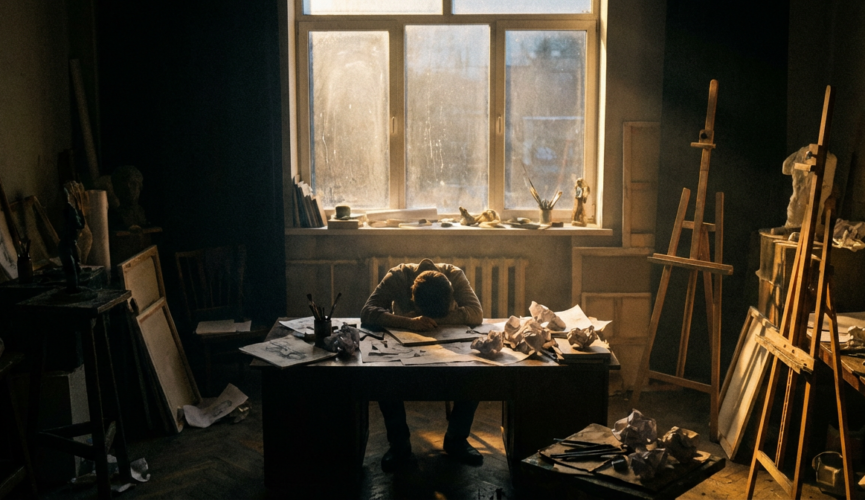
The Version in Your Head
You know that moment when an idea hits and suddenly you can see the whole thing? Not just the concept, but the execution. How it’ll feel. The exact shade of blue in that illustration. The rhythm of that opening paragraph. The way people will react when they experience it.

I used to think this vision was the enemy. Too perfect, too polished, setting impossible standards for the messy reality ahead. But I’ve started paying attention to what actually happens in that flash of inspiration. It’s more interesting than I thought.
The vision isn’t really about perfection. It’s about possibility. Your brain is doing this incredible thing where it’s connecting dots you didn’t even know existed. That character’s motivation linking to a childhood memory you’d forgotten. The way a color palette could solve three different design problems at once. The perfect metaphor that makes a complex idea suddenly clear.
The problem isn’t having the vision. The problem is expecting the first draft to match it.
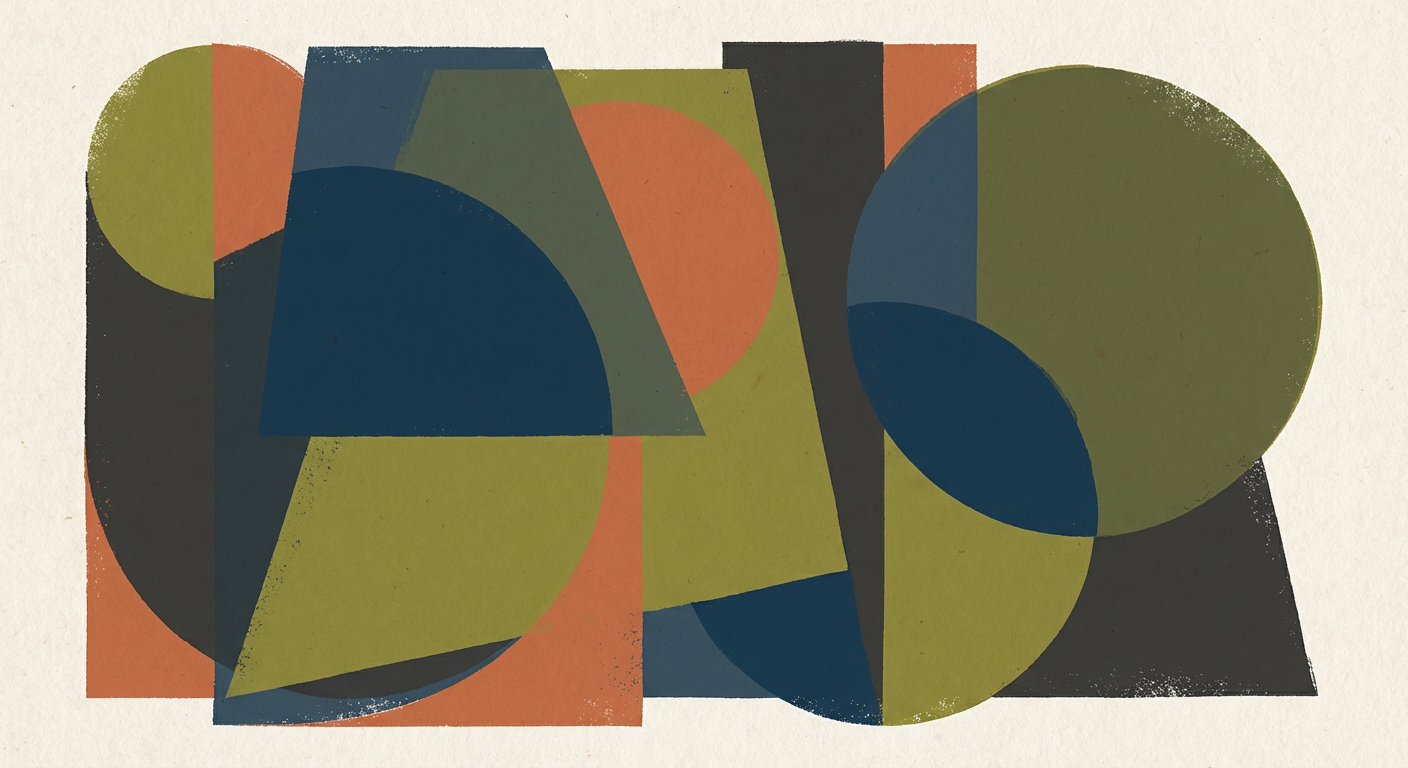
The Version You Actually Make
Here’s what nobody tells you about first drafts: they’re not failed versions of the thing in your head. They’re scouting expeditions.
I have a folder on my computer labeled “Things That Didn’t Work” and it’s massive. There’s the short story where I spent six pages describing a character walking to a coffee shop and never got to the actual plot. The logo design that looked like abstract art until someone pointed out it resembled something anatomical. The song where every verse was in a different key because I thought it would be “experimental.”
But each of these disasters taught me something specific. The coffee shop story showed me I was avoiding conflict. The unfortunate logo revealed my tendency to prioritize cleverness over clarity. The multi-key song helped me understand why musical conventions exist in the first place.
The version you actually make is always teaching you something about the version you thought you wanted to make. Sometimes it’s teaching you that your original vision wasn’t quite right. Sometimes it’s teaching you new techniques you’ll need to get there. And sometimes it’s teaching you that the thing in your head was actually three different projects disguised as one.
The Conversation Between Versions
This is where it gets interesting. There’s this back-and-forth that happens between what you imagined and what you’re creating. You start with the vision, make something that doesn’t match it, and then you have to decide what to do next.
Most advice tells you to push through. Force the reality to match the vision. But I’ve noticed something else happens when you pay attention to where they split apart. Sometimes the thing you accidentally made is pointing toward something better than what you originally planned.
I was working on an illustration last month that was supposed to be clean and minimal. But every time I tried to simplify it, I kept adding details. Little textures. Unexpected colors bleeding in at the edges. For days I fought this, trying to get back to my original concept. Then I stopped fighting and followed where the piece wanted to go. It ended up being one of my favorite things I’ve made this year.
The conversation between versions isn’t a problem to solve, it’s information to use. Your hands know things your brain doesn’t. Your intuition picks up on patterns you haven’t consciously noticed yet. The gaps between vision and execution are often where the real discoveries happen.
When They Finally Meet
Sometimes, if you’re lucky and you’ve done the work, there’s a moment when all three versions align. The thing in your head, the thing you’ve made, and something new that emerged from their conversation.
It doesn’t happen often. And it doesn’t usually happen on the timeline you want. But when it does, you recognize it immediately. There’s this sense of rightness, like puzzle pieces clicking into place. Not because it’s perfect, but because it’s complete in a way that feels inevitable.
I used to think this moment was the goal. The thing you were working toward from the beginning. But I’ve started to suspect it’s more like a side effect. It happens when you’ve gotten good enough at the conversation between vision and execution that you can participate in it consciously instead of just being dragged along by it.
The finished piece still doesn’t match your original vision exactly. But it doesn’t need to. It’s become something that includes your original vision while also including everything you learned by trying to make it real.
What This Means for Tomorrow’s Project
Here’s what I’m trying to remember as I start new work: the version in your head is valuable not because it’s correct, but because it gives you somewhere to start. The version you make is valuable not because it matches your vision, but because it shows you things you couldn’t see from where you started.
And the conversation between them? That’s where you actually get better at this impossible thing we’re all trying to do.
I’m curious about your version of this process. Do you find yourself fighting the gap between vision and execution, or have you found ways to work with it? What have your failed experiments taught you that your successes couldn’t? I’d love to hear about the things that didn’t work the way you expected them to.