Author: Meghan Bowman

The Creative Work Reality Check Nobody Talks About (But Should)

Your First Year Will Be Terrible (And That’s Actually Good News)

Let me tell you about my disaster year. 2019. I thought I was ready to freelance full-time because I’d been doing “creative work” for years. Turns out there’s a difference between having creative hobbies and doing creative work that pays rent. I burned through my savings in four months, cried in three different coffee shops, and seriously considered going back to my soul-crushing office job.

The Creative Work Reality Check Nobody Talks About (But Should)

Here’s what I learned: everyone who’s making it in creative work has a disaster year. Maybe it’s your first year freelancing when you realize you’ve been undercharging by 70%. Maybe it’s the year you launch your Etsy shop and sell exactly twelve items to your mom and her friends. Or maybe it’s when you finish writing that novel and rack up seventeen rejection letters that all say basically the same thing.

But here’s what nobody tells you: this year isn’t a detour from your creative career. It IS your creative career. You’re not failing at being creative. You’re learning the difference between making art and making a living from art. These are completely different skill sets, and most creative education skips the second part entirely.

The Skills They Don’t Teach in Art School

Creative work is maybe 40% actual creating. The rest? Learning to estimate how long projects actually take (spoiler: multiply your first guess by three), figuring out how to talk about money without feeling gross, developing systems for when inspiration doesn’t show up, and building the emotional resilience to handle constant rejection.

I spent my first year trying to be “purely creative” and avoiding all the business stuff. Big mistake. I treated client communication like an interruption instead of part of the job. I had no backup plan for creative blocks. I priced projects based on what I hoped clients would pay instead of what the work was actually worth.

The successful creatives I know now? They embrace the non-creative parts. They have spreadsheets for tracking expenses. They write clear project proposals. They know exactly how much they need to make each month and have realistic plans for hitting those numbers. This isn’t selling out. This is growing up.

Why Your “Overnight Success” Will Take Seven Years

Creative work follows a weird timeline that makes no sense to people outside of it. You might work for months on something that generates zero income, then land a project that funds you for six months. You might build an audience for years before anyone wants to pay you for anything. You might have breakthrough moments followed immediately by periods where nothing works.

I see people quit after their first year because they’re comparing their behind-the-scenes reality to other people’s highlight reels. They think that photographer who just booked a magazine cover started getting paid shoots immediately. They don’t see the three years of shooting friends for free, the equipment bought on credit cards, the nights spent learning Lightroom by watching YouTube tutorials.

The seven-year thing isn’t random. It’s about how long it actually takes to develop professional-level skills, build a reputation, understand your market, and create systems that work. Most “overnight successes” in creative fields have been grinding for years before anyone noticed. The people who make it past year seven are usually the ones who figured out how to love the process more than the outcomes.

The Feast-or-Famine Cycle Is Real (Here’s How to Survive It)

Creative income is lumpy. Really lumpy. You’ll have months where everything clicks and you make more than you ever have, followed by months where you’re rationing coffee and wondering if you should have stuck with that office job. This isn’t because you’re bad at creative work. This is just how creative work works.

The key is planning for the famine during the feast. When I have good months now, I put at least 30% away for lean periods. I use slow periods for things that move my career forward but don’t pay immediately: updating my portfolio, reaching out to dream clients, learning new skills, working on personal projects that might open doors later.

I also keep a “bridge income” option ready. For me, it’s a few reliable clients who always need small projects. For others, it might be teaching workshops, selling templates, or picking up part-time work. Having this removes the panic from slow periods and keeps you from taking desperate projects that underpay or drain your creative energy.

The Hardest Part Nobody Warns You About

The loneliness hits different when you’re doing creative work. Not just the working-from-home loneliness (though that’s real), but the deeper isolation of doing work that most people don’t understand. When you tell someone you’re a writer or designer or photographer, they often respond with “that must be so fun” or “I wish I could do something creative.” They mean well, but they don’t get that you just spent three hours troubleshooting a technical problem or dealing with a difficult client.

Finding your people becomes essential. Not just other creatives in general, but people doing similar work who understand your specific challenges. The best career advice I’ve gotten came from other freelance writers who knew exactly why I was stressed about a particular client situation or why a certain type of project was draining me.

This is why I’m obsessed with creative communities that focus on the real stuff, not just the inspiration porn. Look for groups where people share actual numbers, talk about their failures, and give practical advice about things like contracts and pricing. These conversations will save your sanity and probably your business.

If you’re thinking about making the jump to creative work, or you’re already in it and wondering if the struggle is normal, I promise you’re not alone in this. The path is messier and longer than anyone admits, but it’s also more rewarding than most people imagine once you figure out how to make it work for you.

Your Creative Experiments Should Fail More Often

The Success Theater Nobody Talks About

Here’s what nobody tells you about creative experiments: the ones that work are boring. They’re safe. They’re the creative equivalent of ordering vanilla ice cream when the menu has forty-seven flavors.

Your Creative Experiments Should Fail More Often

I spent three months last year trying to write a novel using only dialogue. No description, no internal monologue, nothing but characters talking. It was terrible. Absolutely unreadable garbage that made my beta readers question my sanity. But in those three months, I learned more about character voice and subtext than I had in the previous three years of “successful” writing projects.

We’ve created this weird culture around creativity where showing your failures feels like career sabotage. Instagram feeds packed with finished paintings, LinkedIn posts about completed projects, portfolio websites that only show the hits. But the real learning happens in the stuff we’re too embarrassed to share. The disasters teach us more than the polished pieces ever will.

Illustration for Your Creative Experiments Should Fail More Often

Why Safe Experiments Are Actually Risky

Most creative experiments aren’t experiments at all. They’re slight tweaks to things we already know work. You try watercolors instead of oils. You write in second person instead of first. You add a synthesizer to your folk songs. Let’s be honest. These aren’t experiments. They’re renovations.

Real experiments have a high probability of failure. That’s what makes them experiments. When I decided to create a photography series using only reflections in puddles, I knew it was probably going to look amateur and gimmicky. It did. But the process taught me to see light differently, and that skill carried into every project afterward. The mess was worth it.

The problem with playing it safe is that you never push against the edges of what’s possible. You never find out what happens when you break the rules completely. You never discover that sometimes the mistakes are more interesting than what you planned. Safe feels smart, but it’s actually the riskiest approach of all.

Safe experiments feel productive because they usually produce something presentable. But presentable isn’t the same as growth-inducing. Sometimes you need to make complete garbage to understand why the good stuff works. I wish someone had told me this earlier in my career.

The Messy Middle Nobody Photographs

Last month I tried to compose music using only sounds I recorded in my kitchen. Spoons on glasses, water dripping, the microwave beeping. I spent two weeks layering these sounds, manipulating them, trying to create something that resembled actual music. My neighbors probably thought I’d lost my mind.

The result was unlistenable noise. Complete sonic chaos. But in that process, I accidentally discovered how rhythm works in ways my music theory classes never taught me. I learned that repetition can be hypnotic even when it’s not musical. I found out that silence is just as important as sound.

None of this would have happened if I’d stuck to my guitar and the chord progressions I already knew. The experiment failed spectacularly, but it changed how I approach every piece of music I write now. Sometimes failure is just education in disguise.

This is the part we never see in creative process posts. The weeks of producing nothing usable. The false starts that lead nowhere. The moments when you question whether you’re wasting your time or having a breakthrough. Usually it’s both at once, and that uncertainty is maddening.

Permission to Waste Time Productively

Here’s the unpopular truth: not every hour you spend creating needs to produce something valuable. Some hours are for exploration. Some are for breaking things just to see what happens. Some are for pursuing ideas that make no logical sense. This drives productivity gurus crazy, but it’s how breakthrough creativity actually works.

I once spent an entire weekend trying to write poetry using only words I found in spam emails. It was ridiculous. The poems were awful. But somewhere in that absurd exercise, I stumbled onto a way of combining unexpected words that I still use in my writing today. The weekend felt wasted until it suddenly didn’t.

The pressure to make every creative moment “count” kills experimentation. When everything has to be productive, nothing can be truly exploratory. You end up optimizing for output instead of discovery. It’s like trying to have fun on a schedule.

The best creative experiments feel like play, not work. They’re driven by curiosity, not results. They ask “what if” instead of “what will this get me.” And yes, most of them go nowhere. That’s exactly the point. If they all succeeded, you wouldn’t be pushing hard enough.

The Compound Interest of Failed Experiments

Failed experiments don’t disappear. They accumulate in ways you don’t expect. That terrible dialogue-only novel taught me things I used in a successful short story six months later. The kitchen music project influenced a commissioned piece I wrote for a local theater. The spam poetry changed how I approach metaphors. Nothing was wasted.

Creative growth isn’t linear. It’s more like compound interest, but messier and less predictable. Every experiment, successful or not, adds to your creative vocabulary. The failed ones often contribute more because they force you further outside your comfort zone. They make you question assumptions you didn’t even know you had.

This year alone I’ve tried painting with coffee, writing fiction in spreadsheets, and creating videos using only footage shot through windows. Two of these experiments produced nothing worth showing anyone. But all three changed how I see creative problems. They shifted something in my brain that I can’t quite articulate.

The trick is learning to measure success differently. Instead of asking “Did this work?” ask “Did this teach me something?” The answer to the second question is almost always yes, even when the first answer is definitely no. Sometimes especially then.

What’s your next completely unreasonable creative experiment going to be? What’s something you’ve been curious about but avoided because it seems too weird, too difficult, or too likely to fail? Start there. Document the process, not just the results. And when it doesn’t work out the way you planned, celebrate that too. That’s where the real learning happens.

The Year I Tried to Plan Everything (And Why My Color-Coded Calendar Failed Me)

January’s Perfect System

I started this year with a 47-page planner. Not kidding. I counted. Color-coded tabs, weekly themes, daily time blocks down to fifteen-minute increments. The works. By January 15th, I’d already fallen behind on my “weekly reflection sessions” and felt like a productivity fraud.

The Year I Tried to Plan Everything (And Why My Color-Coded Calendar Failed Me)

The planner promised to solve my biggest struggle: the constant tug-of-war between needing structure to get things done and craving the freedom to follow interesting tangents. You know that feeling when you’re deep in a creative flow, but your calendar is screaming at you to move on to the next task? Yeah. That was my daily reality.

What I didn’t expect was how quickly my perfect system would start working against me. The more detailed my plans became, the more anxious I felt when life inevitably veered off course. A friend calling with an emergency became a scheduling crisis. An inspiring conversation that ran long felt like failure instead of connection.

Illustration for The Year I Tried to Plan Everything (And Why My Color-Coded Calendar Failed Me)

The Great Experiment Begins

By March, I was ready to throw the planner out entirely. But instead of swinging to complete chaos, I decided to run some experiments. Real ones, with actual data, because I’m nerdy like that.

Experiment one: completely unstructured weeks. I’d wake up and see what felt right. The results? Some magical days where I accomplished more than I had in weeks of rigid planning. But also days where I accomplished exactly nothing and felt terrible about it. The anxiety of not knowing what came next was just as paralyzing as over-scheduling.

Experiment two: the “anchor plus freedom” approach. I scheduled just three non-negotiable things per week and left everything else open. This worked better, but I kept adding “quick tasks” until my open time disappeared. Apparently, I don’t trust myself with completely blank space.

Experiment three was the game changer, but it took me months to figure out why.

What Actually Worked (And What Definitely Didn’t)

The breakthrough came when I stopped trying to plan my energy and started planning around it instead. I began tracking not just what I did, but how I felt doing it. Turns out, I have predictable energy patterns that no amount of color coding can change.

Mornings are for hard thinking work. Period. Not emails, not planning, not “quick calls.” When I protected those hours and let everything else fall where it wanted to, my productivity actually increased. But here’s the kicker: I had to build in deliberate spontaneity breaks.

I started blocking “wander time” into my schedule. Seriously. Two-hour chunks with no agenda except to follow whatever seemed interesting. Sometimes this meant researching something random for a project. Sometimes it meant taking a long walk and ending up at a coffee shop I’d never tried. The key was making spontaneity intentional instead of seeing it as a failure of planning.

What didn’t work? Trying to schedule creative work. Every time I wrote “blog post draft” in a specific time slot, I’d stare at a blank screen. But when I just wrote “writing time” and let myself work on whatever piece felt alive that day, words flowed. The structure provided the container, the flexibility provided the content.

The Uncomfortable Middle Ground

Here’s what nobody tells you about finding balance: it’s not a destination you reach and then maintain. It’s a constant recalibration that changes with seasons, projects, and life circumstances. The system that worked perfectly in spring felt suffocating by fall when my priorities shifted.

I had to learn to hold structure lightly. My weekly planning sessions became check-ins rather than commandments. I’d look at what needed to happen and ask: “What’s the minimum viable structure that gives me freedom to respond to opportunities?” Some weeks that meant detailed day-by-day plans. Other weeks it meant three bullet points and a lot of white space.

The hardest part was giving up the fantasy of the perfect system. I wanted something I could set once and follow forever. Instead, I got something much more useful: the ability to design my weeks based on what’s actually happening rather than what I think should be happening.

My current approach is embarrassingly simple. Sunday evenings, I write down three things that absolutely must happen that week. Everything else gets sorted into “would be nice” and “someday maybe” categories. Then I schedule the three must-haves and leave the rest open for life to fill in. It’s not sexy, but it works.

What I’m Still Figuring Out

Honestly? I’m still terrible at estimating how long things will take. I consistently overpack my days and then feel frustrated when I don’t finish everything. Old habits die hard, and my optimistic relationship with time might be permanent.

I’m also learning that different types of work need different approaches to structure. Administrative tasks benefit from strict scheduling and batching. Creative work needs loose boundaries and permission to meander. Relationship building can’t be rushed or forced into neat time blocks. Pretending otherwise just creates friction.

The biggest ongoing challenge is resisting the urge to optimize everything. There’s something in me that wants to find the one true system and stick to it forever. But the more I experiment, the more I realize that the system itself isn’t the point. The point is staying responsive to what’s needed right now, not what worked last month.

I’m curious about your own experiments with structure and spontaneity. What systems have you tried and abandoned? What unexpected combinations have worked for you? The comments are open, and I’d love to hear about your own messy attempts at finding balance.

The Messy Truth About Building Output-Focused Habits (Plus My Current Experiments)

Why Most Habit Advice Misses the Point

Here’s what nobody tells you about building output-focused habits: the advice industry is obsessed with inputs. Meditate for 10 minutes. Write 500 words. Exercise for 30 minutes. All inputs, zero focus on what you’re actually trying to produce.

I spent two years religiously following input-based habits. I had streaks. I had apps. I had color-coded spreadsheets that would make a project manager weep with joy. And you know what I had to show for it? A lot of mediocre 500-word journal entries and the fitness level of someone who walks briskly for exactly 23 minutes because that’s what the habit tracker demanded.

The shift happened when I started asking different questions. Instead of “Did I write today?” I asked “Did I finish something today?” Instead of “Did I exercise?” I asked “Am I getting stronger?” The focus moved from checking boxes to creating results. Everything changed.

My Current Experiment: The Output Sprint Method

Right now I’m testing something I call Output Sprints. Instead of daily habits, I work in focused 2-3 week bursts aimed at completing specific things. This month’s sprint: finish three client projects and launch my newsletter redesign. Last month: complete a course and ship two blog posts.

Here’s how it works in practice. I pick 2-3 concrete outputs I want to complete in the next 2-3 weeks. Not “work on the newsletter” but “redesign newsletter template and write welcome sequence.” Not “exercise more” but “complete bodyweight strength program and establish baseline metrics.” The specificity matters because vague goals create vague results.

Then I reverse-engineer the daily actions needed to hit those outputs. If I need to finish three client projects in 15 days, that means completing one project every 5 days. If Project A has 8 distinct tasks, I need to finish 1.6 tasks per day. Suddenly my daily actions have actual purpose beyond maintaining a streak.

The failure rate is higher than traditional habit tracking. Some sprints crash and burn spectacularly. Last quarter I planned to write an ebook and launch a course at the same time. Spoiler alert: I finished neither. But when the sprints work, the output is dramatically higher than my old input-focused approach.

What Actually Moves the Needle (And What Doesn’t)

After tracking this stuff for 18 months, some patterns are becoming clear. Time-boxing works better than time-tracking. Setting artificial deadlines works better than “working at your own pace.” Working on fewer things at once works better than trying to maintain progress on everything.

The biggest surprise? Consistency matters less than intensity. I used to write every single day, producing a steady stream of okay content. Now I write in concentrated bursts 3-4 days per week and the quality has jumped noticeably. Same total time investment, dramatically different results.

What doesn’t work: trying to optimize everything at once. I have a folder called “Failed Systems” with 47 different productivity experiments. Most failed because I tried to revolutionize my entire approach overnight. The systems that stick are the ones that change one variable at a time.

Energy management beats time management every time. I used to schedule my hardest creative work for 2 PM because that’s when my calendar had space. Now I protect my peak energy hours (8-11 AM for me) like a guard dog. I’ll reschedule client calls, ignore emails, and pretend my phone doesn’t exist during those hours. The output quality difference is undeniable.

The Tracking System That Actually Helps

My tracking evolved into something I call a Process Notebook. It’s not a habit tracker or productivity app. It’s a simple document where I record what I’m trying to accomplish, what I actually accomplished, and what I learned in the process.

Each week gets one page. At the top I write my current output goals. Throughout the week I jot down what actually happened, what worked, what didn’t, and any insights that emerge. No scoring, no streaks, no colored dots. Just honest documentation of the messy process of trying to create things.

Here’s a real entry from three weeks ago: “Goal: finish client website mockups. What happened: spent 2 hours on mockups, 4 hours falling down a design inspiration rabbit hole. Learning: I need to separate research time from execution time. They require different energy and focus.” Not glamorous, but useful.

The notebook reveals patterns my habit apps missed entirely. I work better with music on Monday mornings but need silence on Friday afternoons. I can handle complex creative work after client calls, but administrative tasks drain me for hours afterward. These insights only emerge when you’re tracking process, not just outcomes.

Where I’m Still Figuring It Out

Let me be completely honest about what’s not working yet. I still haven’t cracked the code on balancing multiple output streams without one cannibalizing the others. When I focus intensely on client work, my personal projects stagnate. When I prioritize personal projects, client quality suffers. The portfolio career juggle remains unsolved.

I’m also struggling with seasonal variation. My output sprint method works brilliantly in fall and winter when I naturally want to hunker down and create. Spring and summer? Different story. I get distracted, antsy, less focused. I haven’t figured out how to adapt the system for different energy seasons.

The measurement problem persists too. How do you measure the output quality of creative work? Word count is meaningless if the words are garbage. Client satisfaction is important but subjective. Time invested doesn’t correlate with value created. I’m experimenting with different metrics but haven’t found anything that feels both accurate and useful.

This is where I’m asking for your help. What output-focused experiments are you running? What’s working in your world that I should try? And where are you stuck in ways that might benefit from a different perspective? Drop me a line and let’s figure this out together.

The Tuesday I Abandoned My Color-Coded Calendar (And What Happened Next)

When My System Cracked

Last Tuesday, my perfectly organized day imploded at 9:47 AM. I know the exact time because I was staring at my color-coded calendar when my friend texted: “Coffee? Now? I’m having a moment.” My calendar said I had three hours blocked for “deep work” followed by a precisely timed lunch break. My friend said she needed me.

I closed the laptop. Grabbed my keys. And discovered something I hadn’t expected about the balance between structure and spontaneity.

For months, I’d been living by my calendar like it was sacred text. Every block color-coded. Every transition planned. It worked brilliantly until it didn’t. Until life showed up with its messy, unscheduled needs and reminded me that the best-laid plans are still just plans.

The Structure Trap I Fell Into

Here’s what I learned about my relationship with structure: I’d turned it into a security blanket instead of a tool. Every morning, I’d review my calendar like a general surveying battle plans. Green for creative work. Blue for admin. Yellow for personal time. It felt productive and purposeful.

But somewhere along the way, I’d confused having a system with being in control. When unexpected opportunities knocked, I found myself saying no automatically. Not because I didn’t want them, but because they weren’t in the calendar. I was scheduling my life so thoroughly that I’d forgotten to leave room for living it.

The breaking point came when I realized I was declining coffee dates, skipping impromptu walks, and missing those random conversations that actually fuel creativity. My structure had become a cage, and I was the one holding the key.

What Happened When I Said Yes

That Tuesday coffee turned into a four-hour conversation about career pivots, creative blocks, and the weird anxiety that comes with pursuing work you actually care about. My friend was wrestling with whether to leave her stable job for freelancing. We talked through fears, mapped out worst-case scenarios, and discovered she’d already solved half her problems just by speaking them out loud.

I got home energized in a way my scheduled “deep work” blocks rarely delivered. The conversation had sparked three new article ideas and reminded me why I started writing in the first place. None of that was on my calendar, but it was exactly what I needed.

The weird part? The work I’d planned to do that morning got done anyway. Faster, actually. Sometimes stepping away from the plan gives you the clarity to execute it better.

Finding the Sweet Spot Between Order and Chaos

I spent the next week experimenting with what I started calling “structured flexibility.” I kept my basic framework but built in what I called “wandering time.” Two hours each day marked simply as “open.” No agenda. No color code. Just space for whatever showed up.

Some days, nothing showed up, and I used the time for whatever felt most urgent or interesting. Other days, serendipity arrived in the form of unexpected phone calls, sudden inspiration, or simply the realization that I needed to step outside and breathe.

The key insight was this: structure shouldn’t eliminate spontaneity. It should create enough stability that you can afford to be spontaneous when it matters. Having most of your day planned means you can say yes to the unplanned without everything falling apart.

The Experiments That Actually Worked

After two months of tweaking, here’s what stuck. I still block time for important work, but I’ve learned to hold it lightly. I schedule buffer time around meetings because conversations sometimes run over and that’s often when the good stuff happens. I keep Friday afternoons completely open for whatever the week demands.

I also started what I call “micro-adventures.” Small spontaneous decisions that break the routine without derailing the day. Taking a different route home. Trying a new coffee shop. Calling someone I haven’t talked to in months. These tiny disruptions keep me from feeling too locked into my systems.

The biggest change? I stopped feeling guilty about deviating from the plan. Structure is supposed to work for your life, not the other way around. When the plan isn’t working, changing it isn’t failure. It’s just common sense.

I’m curious about your own experiments with this balance. Do you lean more toward rigid planning or fly-by-the-seat-of-your-pants living? What happens when you try the opposite of your natural tendency? I’d love to hear about your own discoveries in the comments, especially the ones that surprised you.

The Creative Routine That Actually Stuck (And The Five That Spectacularly Didn’t)

January’s Great Experiment: The 5 AM Writer Fantasy

I bought the alarm clock with the sunrise simulation feature. I meal-prepped overnight oats. I even downloaded one of those apps that tracks your circadian rhythms. For exactly eleven days, I was that person who posts mysterious pre-dawn photos of coffee cups next to notebooks.

The Creative Routine That Actually Stuck (And The Five That Spectacularly Didn't)
The Creative Routine That Actually Stuck (And The Five That Spectacularly Didn’t)

Then I missed one morning because my kid had a fever. Then another because I’d stayed up until 2 AM fixing a work crisis. By February, the fancy alarm clock was gathering dust, and I was back to my old pattern of squeezing creativity into whatever cracks the day left behind. The overnight oats expired in my fridge, a monument to good intentions.

Here’s what I learned: sustainable doesn’t mean optimal. It means something you can actually maintain when life gets messy. And life always gets messy.

Illustration for The Creative Routine That Actually Stuck (And The Five That Spectacularly Didn't)
Illustration for The Creative Routine That Actually Stuck (And The Five That Spectacularly Didn’t)

The Pomodoro Phase and Why It Made Me Want to Throw Tomatoes

March through May was my deep dive into time-blocking. Twenty-five minutes of focused work, five-minute breaks. I downloaded three different timer apps and color-coded my calendar like a rainbow exploded on it. The first week, I felt like a productivity ninja.

But here’s the thing about creative work that the Pomodoro people don’t tell you: sometimes you need to follow an idea down a rabbit hole for three hours straight. Sometimes the magic happens in minute twenty-seven, right when you’re supposed to stop. I found myself fighting the system more than using it.

The breaking point came when I was mid-sentence on something that felt important, and the timer went off. Instead of taking my prescribed break, I threw my phone across the room. Not my finest moment, but it taught me that rigid systems and creative work make uncomfortable bedfellows.

What stuck: the awareness of time passing. Even though I ditched the timers, I got better at recognizing when I was spinning my wheels versus making real progress.

The Accountability Partner Disaster

Sarah from my writing group and I decided to be accountability partners in June. We’d check in daily, share our goals, celebrate wins. It sounded perfect on paper. Sarah is organized, motivated, and has that enviable ability to finish what she starts.

Week one was great. Week two, I was already dreading our daily texts. Not because Sarah was pushy, but because I felt like I was constantly disappointing someone. When I had a rough week and barely touched my creative work, I started avoiding her messages entirely. By July, we were both pretending the whole thing never happened.

The uncomfortable truth: external accountability can turn into external pressure, and pressure is creativity’s kryptonite. I work better when I’m accountable to the work itself, not to someone else’s expectations of my relationship with the work.

September’s Surprise: The Anti-Routine That Turned Into a Routine

By fall, I was fed up with systems. Instead of planning my creative time, I started capturing it. I kept a small notebook and wrote down every time I did something creative, no matter how small. Sketched while waiting for coffee. Drafted three sentences during lunch. Edited a paragraph before bed.

This wasn’t a routine in the traditional sense. It was more like creative scavenging. But something interesting happened: I started noticing patterns. I write better dialogue in the afternoon. Visual ideas hit me during walks. My editing brain works best right after I eat.

Instead of forcing myself into predetermined slots, I started working with my natural rhythms. I stopped trying to be a morning person and embraced being someone who gets creative bursts at 9 PM. I stopped apologizing for working in fragments and started seeing those fragments as building blocks.

Three months later, this non-system had produced more finished work than any of my previous attempts at optimization. Not because I was working more hours, but because I was working with myself instead of against myself.

What Actually Works (For Me, Right Now)

My current approach looks nothing like the pristine morning routine I thought I wanted. It’s built around tiny frictions and small captures. I keep materials everywhere: notebook in my car, voice memos app on my phone’s home screen, a sketch pad in my kitchen drawer.

I’ve stopped trying to find large blocks of time and started honoring small ones. Fifteen minutes here, thirty minutes there. I’ve learned to start in the middle of things instead of waiting for perfect beginnings. Most days, I touch my creative work at least briefly. Some days, those brief touches turn into deep sessions.

The most surprising part: I’m more consistent now than when I had elaborate systems. Consistency, it turns out, isn’t about doing the same thing at the same time every day. It’s about showing up to your creative work more often than you don’t, in whatever way you can manage.

This might not work for you. Your brain might love the structure I couldn’t handle, or need the accountability that made me want to hide. But if you’re struggling to maintain some perfect creative routine you read about somewhere, maybe the answer isn’t finding a better system. Maybe it’s learning to work with the system you already are.

I’d love to hear about your own creative routine experiments, especially the ones that failed spectacularly. Sometimes the disasters teach us more than the successes ever could.

What My Failed Poetry Collection Taught Me About Creative Courage

The Experiment That Wasn’t Supposed to Happen

Last spring, I decided to write a poem every day for thirty days. Not because I’m a poet—I’m decidedly not—but because I was stuck in a creative rut with my usual projects. My fiction felt stale. My essays were circling the same tired themes. I needed to shake something loose, and poetry seemed sufficiently terrifying to do the job.

What My Failed Poetry Collection Taught Me About Creative Courage

The rules were simple: one poem per day, no matter how bad. No editing until the month was over. No sharing with anyone. Just me, a notebook, and whatever words showed up when I sat down each morning with coffee that was always too cold by the time I remembered it existed.

I made it eighteen days before I quit. But here’s what caught me off guard: those eighteen terrible poems taught me more about my creative process than the last two years of “successful” projects combined.

The Mess Behind the Curtain

Let me be clear about the quality of these poems. They were objectively awful. Day three produced something about my coffee maker that rhymed “brewing” with “doing” six times. Day seven was an entire sonnet about parallel parking that somehow became a meditation on mortality. Day twelve was just the word “Tuesday” repeated forty-seven times with varying punctuation.

But watching myself fail this spectacularly revealed patterns I’d never noticed before. When I got scared of a big emotion, I defaulted to describing objects in the room. When I didn’t know what I actually thought about something, I’d pile on adjectives like I could bury the uncertainty under pretty words. When the poem started getting too real, I’d suddenly pivot to humor. Not because the moment was funny, but because funny felt safer than honest.

These weren’t just poetry problems. They were my problems, showing up in miniature. Every creative avoidance strategy I’d developed over years of writing was right there in those eighteen days of terrible verse, condensed and impossible to ignore.

The Permission to Suck

Something shifted around day ten. I’d written something so aggressively bad about my neighbor’s lawn gnome that I actually laughed out loud at my own incompetence. And in that moment, I felt this weird lightness. I’d already failed so completely that there was nowhere to go but sideways.

That’s when I started taking bigger risks. Day eleven was about my father’s hands, something I’d been trying to write about for years but could never find the right angle. The poem was still terrible, but buried in those clunky lines was an image that made me cry: his fingers drumming on the steering wheel during difficult conversations, keeping time to songs only he could hear.

I’d been so afraid of writing about that badly that I’d never written about it at all. The poetry experiment gave me permission to write about it badly, which turned out to be the door I needed to write about it honestly.

The next day, I tried writing about the year I spent sleeping in my car. Another terrible poem, another buried truth I’d been circling around in my “real” writing for months without ever diving in.

When the Experiment Breaks Down

Day eighteen was about my grandmother’s death, and I couldn’t finish it. Not because it was too sad, but because halfway through, I realized I was writing it for her, not for me. I was trying to make her proud with my words, even though she was gone and even though the poem was objectively terrible and even though the whole point was supposed to be writing badly without caring what anyone thought.

That’s when I understood why I’d quit. The experiment had worked too well. It showed me how much of my creative energy went toward managing other people’s hypothetical opinions, even when no one was watching. Especially when no one was watching.

I could write terrible poems about coffee makers and lawn gnomes all day long. But the moment I touched something that mattered, all my old patterns kicked in. The audience in my head got louder. The stakes felt higher. The permission to suck evaporated.

So I stopped. Not because I was lazy or undisciplined, but because the experiment had given me what I came for: a clear view of my own creative fears in action.

What Stays After the Experiment Ends

I never finished the thirty days, and I never turned those poems into anything readable. But the images I found in those terrible verses? My father’s drumming fingers, the weight of sleeping in bucket seats, the particular shade of morning light through a windshield. Those images made it into other work. Essays that had been stuck suddenly moved forward. A short story I’d abandoned found its ending.

The experiment taught me that sometimes the goal isn’t to create something good. Sometimes the goal is to create something honest enough that you can see what you’re actually afraid of. And once you see it clearly, you can decide whether that fear is protecting something worth protecting, or just protecting you from the discomfort of growth.

I still have that notebook somewhere, full of eighteen days of creative courage disguised as creative failure. Maybe that’s what the best experiments really are: controlled failures that teach us something we couldn’t learn any other way.

What creative experiment are you avoiding because you’re afraid it won’t work? Maybe the not-working is exactly the point.

The 70/30 Rule That Changed How I Plan My Days (And Why Your Planner Might Be Sabotaging You)

Why I Threw My Color-Coded Calendar Out the Window

Last Tuesday, I had a perfectly planned day. Every fifteen-minute block was accounted for. Email from 9-9:30. Writing from 9:30-11:00. Client calls scheduled with military precision. Then my neighbor’s water pipe burst, flooding into my home office.

The 70/30 Rule That Changed How I Plan My Days (And Why Your Planner Might Be Sabotaging You)

Instead of panicking, I found myself actually relieved. Not because I enjoy mopping up dirty water at 10 AM, but because that rigid schedule had been choking me for weeks. I’d become so obsessed with optimization that I’d forgotten how to roll with life’s punches.

That flood taught me something: the sweet spot between chaos and control isn’t about perfect balance. It’s about smart imbalance.

Illustration for The 70/30 Rule That Changed How I Plan My Days (And Why Your Planner Might Be Sabotaging You)

The 70/30 Framework That Actually Works

Here’s what I learned after months of failed experiments with time blocking, bullet journaling, and every productivity system you can imagine: structure works best when it covers about 70% of your day, leaving 30% deliberately unplanned.

This isn’t some random ratio I made up. I tracked my energy, productivity, and satisfaction levels for three months using different splits. 90/10 left me rigid and stressed. 50/50 felt too scattered. But 70/30? That was the sweet spot where I could maintain momentum without losing my sanity.

The 70% gives you backbone. These are your must-dos: the meeting you can’t reschedule, the workout that keeps you sane, the writing session that pays the bills. The 30% gives you breathing room for the unexpected, the inspired, and the purely human moments that make life worth living.

How to Build Structure That Bends Without Breaking

Start with your energy patterns, not your to-do list. I wasted years trying to force myself into morning productivity when I’m naturally sharper after 2 PM. Once I stopped fighting my biology and scheduled demanding work for my actual peak hours, everything clicked.

Create what I call “anchor activities” instead of rigid time blocks. My anchors are: morning coffee ritual (not timed, just consistent), focused work session (happens somewhere between 2-5 PM), and evening wind-down (starts when work feels done, not at 7 PM sharp). These anchors keep my day grounded while allowing for natural flow.

Build buffer zones around everything that matters. If a call is scheduled for 3 PM, I block 2:45-3:30. If I need two hours for deep work, I carve out three. This isn’t pessimism, it’s realism. Things take longer than we think, and the extra space prevents that awful feeling of running perpetually behind.

When to Embrace the Beautiful Mess of Spontaneity

That 30% unstructured time isn’t just empty space, it’s where the magic happens. It’s for the conversation that sparks a new project. The article that demands to be written right now. The afternoon walk that unlocks the solution you’ve been wrestling with for weeks.

I’ve learned to tell the difference between productive spontaneity and procrastination. Productive spontaneity feels energizing, even when it’s challenging. It pulls you forward. Procrastination feels heavy and avoidant. It’s the difference between diving into an unexpected creative project and mindlessly scrolling social media because your planned task feels overwhelming.

The key is protecting that spontaneous space like a guard dog. Don’t let meetings creep into it. Don’t use it as overflow for tasks that ran long. Treat it as sacred time for whatever your day organically calls for.

Making Peace with the Perfectly Imperfect Day

This approach isn’t for everyone. If you’re in a role where every minute is billable or accounted for, you might need more structure than 70%. If you’re naturally disciplined and thrive on routine, you might prefer 80/20. But if you’re like me, creative, easily overwhelmed by rigid systems, and prone to rebellion against your own best-laid plans, this framework might be exactly what you need.

The hardest part isn’t implementing the system. It’s letting go of the productivity guilt. There will be days when that 30% turns into an impromptu lunch with a friend instead of tackling your side project. There will be weeks when urgent tasks eat into your structured time. This isn’t failure. This is life.

What matters is returning to the framework, not perfecting it. Some days you’ll need more structure to feel grounded. Others, you’ll crave more freedom to explore. The 70/30 rule isn’t a rigid prescription, it’s a starting point for finding your own sustainable rhythm.

I’d love to hear how you balance structure with spontaneity in your own days. What systems have you tried and abandoned? What unexpected discoveries have you made about your own rhythms? Drop me a comment or shoot me an email. I’m always curious about what works (and what spectacularly doesn’t) for fellow recovering perfectionist planners.

The Pen That Thinks Back: Why Everyone’s Writing to Themselves Again

Something Shifted in My Coffee Shop

I noticed it first at the corner table. A woman in her thirties, laptop closed, scribbling furiously in a leather-bound notebook. Then the college student two tables over, same thing. No phones in sight. Just pens moving across paper like they were solving the world’s problems one sentence at a time.

This wasn’t isolated. Walk into any bookstore and you’ll find entire sections devoted to journals, planners, and prompt books. The bullet journaling movement alone has spawned a market worth over $200 million in specialized stationery and planning systems. People are buying $30 notebooks like they’re investing in their mental health. Which, it turns out, they might be.

What caught my attention wasn’t the trend itself. It was the intensity. These weren’t people jotting down grocery lists. They were engaged in something that looked almost meditative. Something deliberate.

Your Brain on Paper

The science behind what I was witnessing is surprisingly solid. Research consistently shows that journaling reduces cortisol levels and improves working memory. Your stress hormone drops when you transfer thoughts from your head to paper. Your brain literally functions better when it’s not juggling every worry, idea, and random observation internally.

But here’s where it gets interesting. The benefits aren’t just about dumping thoughts. They’re about the conversation that happens between your pen and your brain. Writing forces you to organize scattered thinking. It makes you choose words. It creates a feedback loop where your thoughts become more coherent because you have to make them coherent enough to write down.

This isn’t new information, but it’s information we keep rediscovering. Every few years, another study confirms what writers have known forever: putting pen to paper changes how you think. The question isn’t whether journaling works. It’s why we keep forgetting it works.

The Algorithm Doesn’t Want Your Real Story

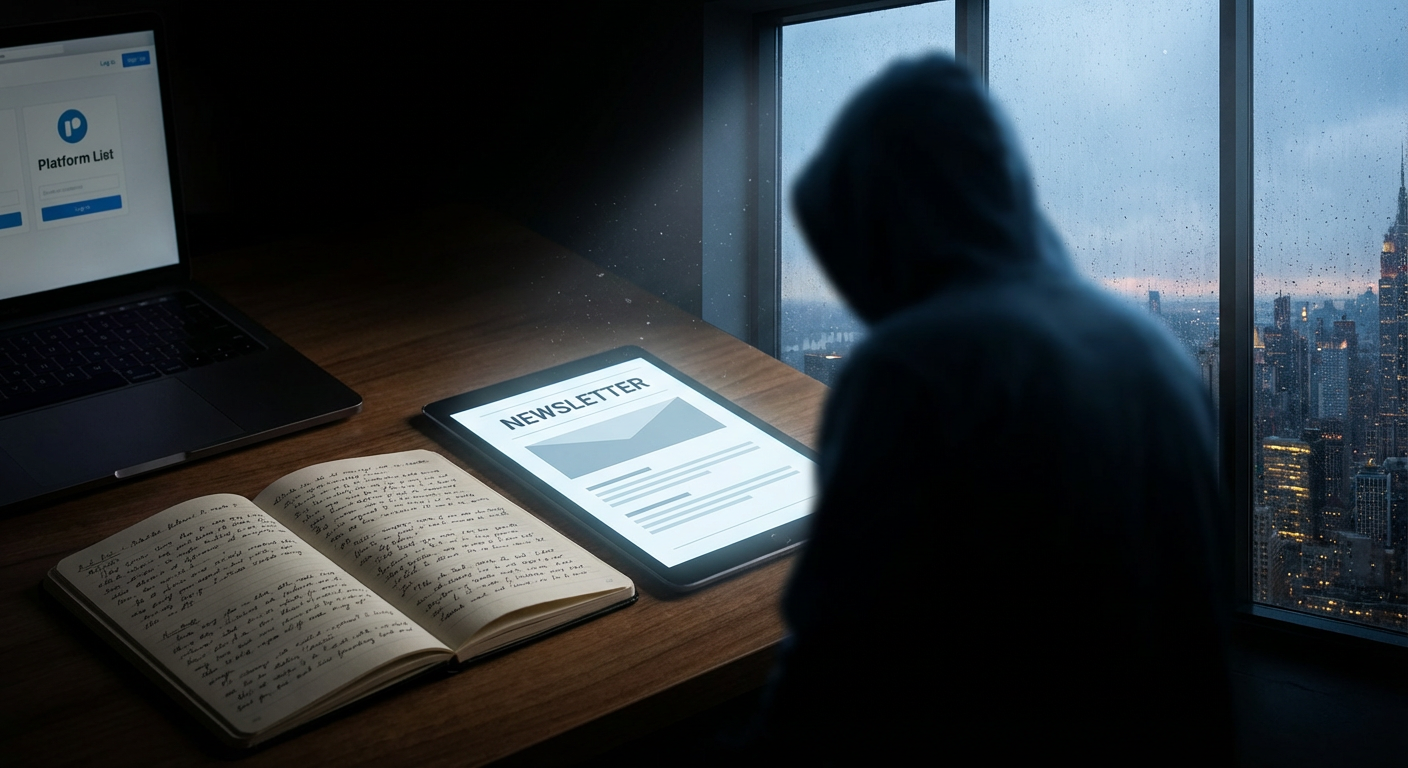
Social media promised to give everyone a voice. Instead, it gave everyone an audience. There’s a difference. When you write for an audience, you perform. When you write for yourself, you discover. The personal blog renaissance happening across platforms like Substack and Ghost isn’t just about publishing. It’s about reclaiming ownership of your own narrative.

People are tired of optimizing their thoughts for engagement. They’re exhausted by the pressure to make every observation shareable, every insight quotable. The return to long-form personal essays and private journaling represents something deeper than nostalgia. It’s a rebellion against the commodification of personal experience.

Even the therapy-adjacent journaling prompts generating millions of views on TikTok reveal this hunger for authentic self-reflection. People are crowdsourcing the questions they need to ask themselves because somewhere along the way, we stopped trusting our own curiosity about our inner lives.

The Gratitude Industrial Complex

Of all the journaling practices gaining traction, gratitude journaling has the strongest research backing. Randomized controlled trials show it outperforms other positive psychology interventions in measurable ways. Write down three things you’re grateful for daily, and your baseline happiness genuinely increases over time.

But here’s what the research doesn’t capture: gratitude journaling works best when it’s specific and personal, not generic. “I’m grateful for my family” is less powerful than “I’m grateful Mom called to check on my presentation anxiety without me asking.” The details matter because they force you to pay attention to the texture of your actual life instead of the highlight reel.

The most effective journaling isn’t about following formulas or filling out prompted pages. It’s about developing a practice of noticing. What happened today that surprised you? What assumption got challenged? What small moment made you pause? The James Clear habit building approach applies here: consistency beats intensity. Better to write one honest sentence daily than to attempt profound insights weekly.

The Conversation You’re Already Having

Here’s what I’ve realized watching people rediscover journaling: we’re all already talking to ourselves constantly. The difference is whether we’re having that conversation intentionally or letting it run on autopilot. Journaling is simply the practice of making that internal dialogue visible and deliberate.

The best personal writing doesn’t try to impress anyone. It tries to understand something. Writers like those featured on The Marginalian long-form writing demonstrate this beautifully. They follow their curiosity without knowing where it leads. They ask questions without forcing answers. They trust that the act of inquiry itself has value.

Maybe that’s why journaling keeps resurging despite every technological innovation designed to replace it. No app can replicate the specific friction of pen on paper, the way your handwriting changes with your mood, the physical act of turning a page. These analog elements aren’t bugs in the system. They’re features. They slow you down just enough to think while you write instead of just transcribing thoughts.

The woman at the coffee shop corner table isn’t performing productivity or optimizing her mental health metrics. She’s having a conversation with herself. And apparently, it’s a conversation worth having. What questions are you avoiding asking yourself? What would happen if you started writing them down instead of just thinking about them?

Your Digital Diary Is Making You Worse at Being Human

The Instagram Stories Generation Can’t Sit Still With Their Thoughts

Here’s an uncomfortable truth: most of us have forgotten how to think without an audience. We’ve replaced genuine self-reflection with performative vulnerability, trading the messy work of understanding ourselves for the instant gratification of likes and comments. The result is a generation that documents everything but understands nothing.

Your Digital Diary Is Making You Worse at Being Human

Real journaling isn’t content creation. It’s not therapy speak wrapped in aesthetic layouts for TikTok views. It’s the unglamorous practice of sitting with your actual thoughts, not the polished versions you’d share online. Most people suck at it because it requires something our hyperconnected world actively discourages: sustained attention to your inner life.

Illustration for Your Digital Diary Is Making You Worse at Being Human

The Science Everyone Ignores When It Gets Inconvenient

Research consistently shows that handwritten journaling reduces cortisol levels and improves working memory. These aren’t feel-good platitudes from wellness influencers. These are measurable changes that happen when you engage in sustained, reflective writing without digital interference.

The evidence for gratitude journaling specifically beats other positive psychology interventions in randomized controlled trials. Yet most people would rather scroll through motivational quotes than spend ten minutes writing down three things they’re actually thankful for. The disconnect between what works and what we do reveals our addiction to passive consumption over active engagement.

Meanwhile, the bullet journaling trend has spawned a $200 million market in specialty stationery and planners. People are literally buying their way into productivity theater instead of doing the simple work of putting pen to paper consistently. The aesthetic has become more important than the practice itself.

Why Your Thoughts Need More Space Than Social Media Allows

Character limits and algorithmic feeds have trained us to think in soundbites. Complex emotions get reduced to emoji reactions. Rich experiences become Instagram captions. We’ve lost the ability to sit with ambiguity and contradiction, the very things that make us human.

Real meaning-making requires space to be wrong, to contradict yourself, to explore ideas without immediate judgment or feedback. Social media platforms actively discourage this kind of thinking because it doesn’t drive engagement. Uncertainty doesn’t go viral. Complexity doesn’t convert.

This is why therapy-adjacent journaling prompts rack up millions of views on TikTok while actual therapeutic journaling happens in private, away from cameras. The performance of self-awareness has replaced the practice of it. We’ve confused consuming content about emotional intelligence with actually developing it.

The Personal Blog Renaissance Nobody Talks About

Something interesting is happening in the corners of the internet. People are quietly returning to personal blogs, reclaiming their narratives from algorithmic feeds. Platforms like Substack and Ghost are seeing explosive growth in long-form personal essays, which tells me there’s real hunger for authentic storytelling that social media can’t satisfy.

This mirrors what The Marginalian long-form writing has always understood: depth takes time. Real insights emerge through extended reflection, not rapid-fire posting. The writers finding audiences on these platforms aren’t chasing trends or optimizing for shareability. They’re doing the slow work of making sense of their experiences.

The habit formation experts like James Clear habit building consistently emphasize systems over goals, process over outcomes. Journaling embodies this philosophy perfectly. The value isn’t in any single entry but in the cumulative effect of regular self-examination. Yet we keep looking for immediate returns on what is fundamentally a long-term investment.

The Uncomfortable Truth About Making Meaning

Making meaning isn’t comfortable. It requires confronting the gaps between who you think you are and who you actually are in your daily choices. It means acknowledging that your neat personal narratives often don’t match the messy reality of your behavior. Most people prefer the illusion of self-knowledge to the work of actually developing it.

Digital platforms make it easy to curate an identity without doing the internal work to understand what that identity actually means. You can reblog quotes about authenticity while avoiding authentic self-examination. You can share vulnerability without being vulnerable. You can perform growth without actually growing.

Real journaling forces you to confront these contradictions. It creates a record of your actual thoughts over time, making it impossible to maintain comfortable delusions about your consistency or wisdom. This is why most people abandon the practice after a few weeks. It’s easier to consume inspiration than to generate insight.

The path forward requires choosing discomfort over convenience, depth over speed, and private growth over public performance. Your thoughts deserve better than the confines of someone else’s platform. They deserve the full space of sustained attention, the luxury of being wrong, and the time needed to discover what you actually think about your own life. The only question is whether you’re willing to give them that space.