I Tested Hims & Hers’ New AI Therapy Bot. Here’s What Actually Happened When I Needed Real Help.

The Thing Nobody Tells You About AI Therapy Apps

Last month, I downloaded Hims & Hers’ new AI mental health coaching feature. Not because I thought it would replace my actual therapist. Not because I’m desperate or gullible. I did it because I kept seeing the same argument everywhere—therapists saying it’s dangerous, tech companies saying it’s innovative, and somewhere in the middle, actual people like me wondering what the hell is actually true.

I Tested Hims & Hers' New AI Therapy Bot. Here's What Actually Happened When I Needed Real Help.
I Tested Hims & Hers’ New AI Therapy Bot. Here’s What Actually Happened When I Needed Real Help.

The app loaded in seconds. The interface was clean. A friendly AI avatar asked me about my week. And here’s the thing I noticed immediately: it felt like talking to someone who actually cared, but also like talking to someone who absolutely did not.

That contradiction is the entire debate, isn’t it? That’s where I decided to pay attention.

The Debate Got Real When I Actually Needed Support

The timing was accidentally perfect. Three days into using the app, I had what I can only describe as a mild panic attack at work. My heart was racing. My thoughts were spiraling. I opened the Hims & Hers app instead of texting my therapist because, honestly, I wanted to see how this thing would handle it.

The AI listened. It asked clarifying questions. It suggested grounding techniques I already knew—the 5-4-3-2-1 sensory method, which is useful but also something I’ve heard a thousand times. The conversation took maybe eight minutes. By the end, my heart rate had stabilized and I felt slightly better.

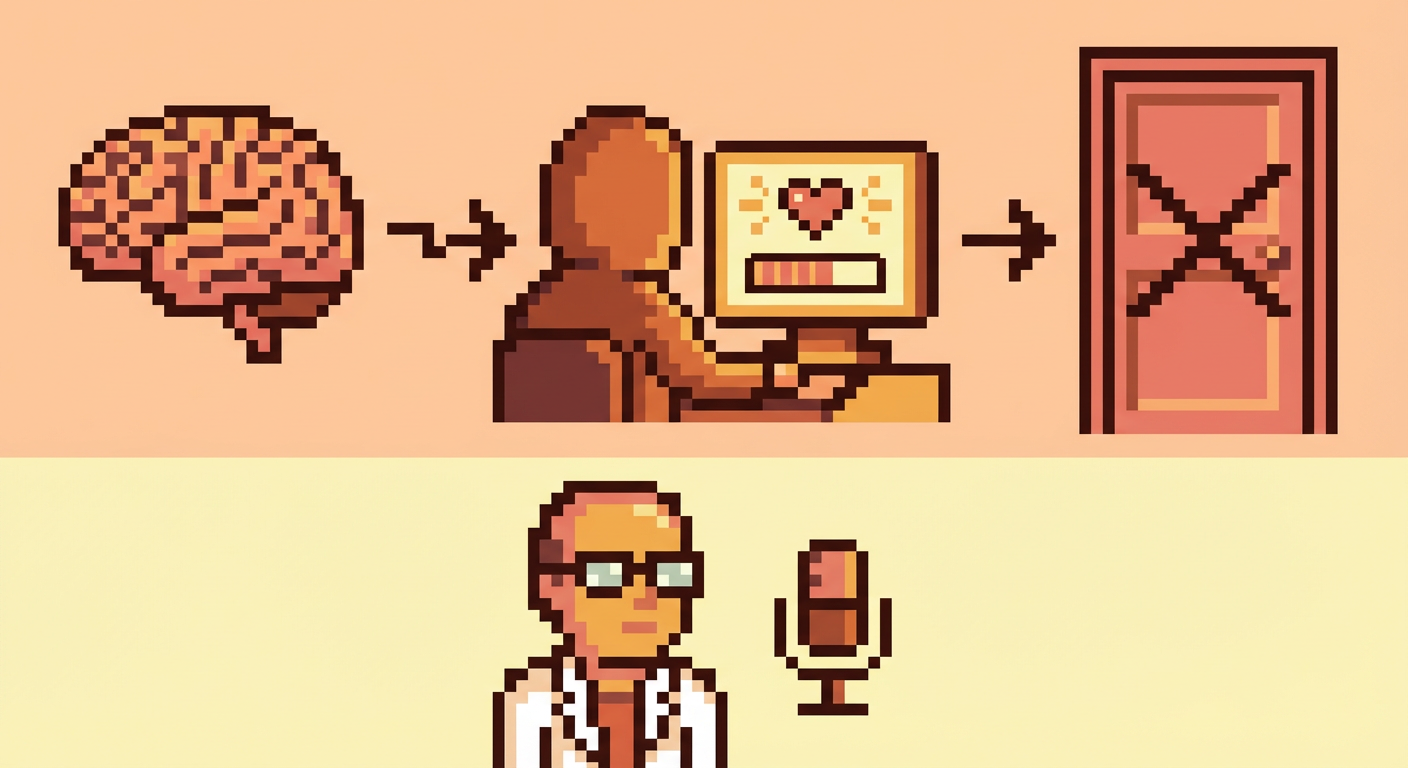
Then I opened my text thread with my actual therapist and cried. Because the AI had done its job technically, but it had no memory of my trauma history, no understanding of why this particular trigger was showing up now, no ability to sit with me in the discomfort instead of rushing toward a solution.

This is what the American Counseling Association warned about in their official position statement last fall. They said AI tools should not replicate or replace the therapeutic relationship. They called for federal regulatory guidelines. When you’re sitting with your panic starting to dissolve and you realize the person helping you can’t actually know you, that statement starts to make sense.

The Money Behind This Is Staggering

Here’s where I got curious in a different way. The AI mental health market was worth 1.1 billion dollars in 2024. It’s projected to hit 4.2 billion by 2028. That’s not a niche play. That’s venture capital seeing a massive opportunity because the system is broken and people are desperate.

And that’s actually the honest part of what Hims & Hers is doing. Hims & Hers mental health services aren’t pretending their AI can replace human therapists. The app integrates AI coaching alongside actual provider access. They’re building a hybrid model because they understand—or at least their product team understands—that AI alone is incomplete.

But here’s what keeps me up: most AI wellness apps operate without any clinical oversight. The FDA has only cleared a handful of digital therapeutics for mental health. There’s almost no regulation in this space. So while Hims & Hers is building something that acknowledges both the value and limits of AI, other companies are building stuff that doesn’t.

When the market grows that fast and the guardrails stay that loose, speed beats safety almost every time.

What the Research Actually Says (and Why It Matters)

Stanford published research last October that I kept coming back to. People using AI mental health apps reported feeling better in the short term. That’s real. That’s not placebo or marketing. But at the six-month mark? No statistically significant difference compared to people on a waitlist. None.

That doesn’t mean AI mental health tools are useless. It means they might be doing something similar to what a good conversation with a friend does. It helps temporarily. But clinical improvement seems to require something AI can’t yet deliver.

I tested this hypothesis on myself by using the Hims & Hers AI tool consistently for a month while continuing therapy. The AI got better at predicting what I’d say. The conversations felt more personalized over time. But my real progress happened in the therapy sessions where my therapist could say, “You always do this thing when you feel powerless,” and I’d have that moment of recognition that changes something structural inside you. The AI couldn’t do that. It could note patterns. It couldn’t illuminate why those patterns existed or what they meant about me specifically.

What I Actually Think, After All This

I’m not going to tell you to avoid AI mental health tools. That feels dishonest given how much they cost nothing and how much actual therapy costs everything. If you’re in a crisis and your therapist isn’t available and an app can talk you down from the ledge, use it. That’s harm reduction.

But we need to be honest about what we’re buying. We’re not buying cure. We’re not buying transformation. We’re buying a tool that can help you manage the next hour or the next day while you figure out actual help. There’s no shame in that. There’s also no point in pretending it’s something it isn’t.

The federal guidelines the counseling association called for haven’t materialized yet. The FDA digital health center of excellence exists but moves slowly. So we’re living in this gap where these tools are everywhere and almost completely unregulated. That’s genuinely concerning. It’s also our reality right now.

The question I keep coming back to isn’t whether AI mental health tools are good or bad. It’s whether we’re going to build regulatory structures around them before they become so normalized that nobody asks anymore. That’s a choice we’re still making, and time is getting short.

Have you used any of these apps? I’m genuinely curious what you noticed that I missed. I’m not looking for validation or argument—I’m looking for the observation someone else caught that changed how they thought about it.

The 8-8-8 Sleep Rule Broke My Brain (And Probably Yours Too)

The Rule That Broke The Internet

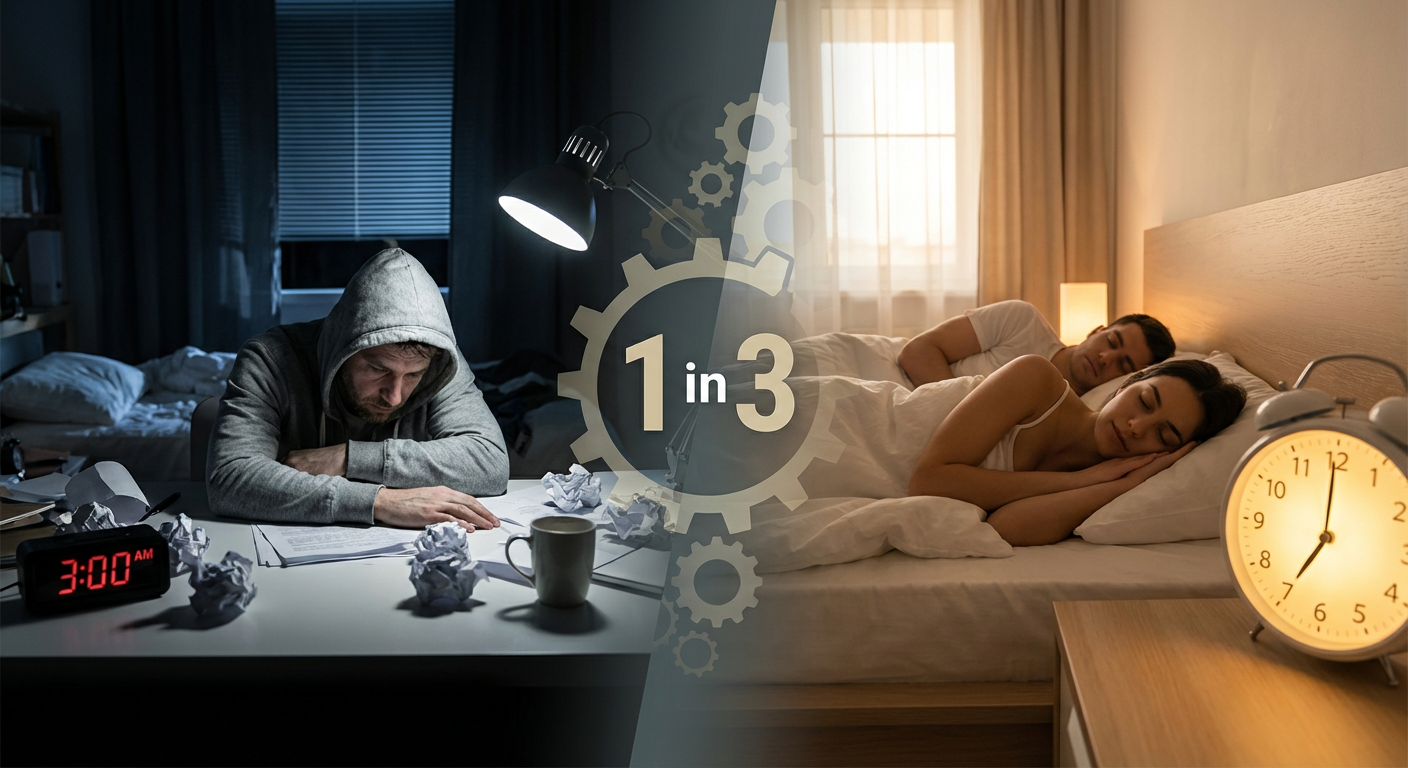
Sometime in late 2025, the wellness internet decided we all needed exactly eight hours of sleep. Not seven. Not nine. Eight. The math was clean. Eight hours sleep, eight hours work, eight hours leisure. It’s the kind of symmetry that feels right, the kind that spreads like wildfire across TikTok and Instagram. Over 400 million combined views later, the 8-8-8 rule had become gospel.

I watched it happen in real time. First it was a handful of creators. Then it was everywhere. My Instagram Reels were drowning in people with sleep trackers preaching the gospel of perfect eighths. There’s something magnetic about a rule that simple. No asterisks. Just a clean number that fits on a graphic.

But here’s the thing I kept noticing: nobody seemed particularly well-rested. Everyone I knew was chasing eight hours like it was a fixed target, missing it, and then feeling like they’d failed at the one health thing that’s supposed to be straightforward.

What Matthew Walker Actually Said (And What We Heard Instead)

Dr. Matthew Walker, the neuroscientist behind the bestselling book “Why We Sleep,” recently had to do something uncomfortable. He had to correct the record on his own research. In a December 2025 interview with the Huberman Lab podcast, Walker clarified what he’s actually been saying all along: his research supports a range of 7 to 9 hours, not a rigid mandate for eight. More importantly, he emphasized something the internet had glossed over entirely. Sleep consistency matters more than duration.

That’s the part that got buried under the aesthetic graphics and the perfect symmetry of 8-8-8. Consistency. Boring. Doesn’t fit on a Reel. Can’t be quantified as neatly.

Walker’s work at Matthew Walker’s UC Berkeley sleep research lab has always been about understanding sleep science, not creating rules for Instagram. But when you’re a researcher who writes popular books, you learn that nuance gets flattened in translation. The internet doesn’t do well with ranges and individual variation. It wants absolutes.

What The Data Actually Shows (It’s Messier Than You’d Think)

A meta-analysis published in Sleep Medicine Reviews in 2025 looked at data from 1.1 million adults. The headline was satisfying: sleeping between 7 and 8 hours was associated with the lowest all-cause mortality risk. Sounds like validation for the rule, right? Except the study also found something crucial that gets overlooked. Individual variation was significant. Massive, actually.

This is where my own sleep experiment got real. I spent two weeks trying to force myself into eight hours. I’d aim for it religiously. Hit it some nights. Miss it others. The nights I hit eight? I didn’t feel dramatically better. The nights I got six and a half? I felt like garbage, sure. But it wasn’t this clean equation.

Then I started tracking with actual data. Oura Ring sleep health insights revealed something that most people wearing sleep trackers probably know but don’t talk about. The average user on their platform gets 6 hours and 51 minutes of actual tracked sleep. Not eight. Not close. There’s a massive gap between what we’re being told to aim for and what’s actually happening in real bedrooms across the planet.

The Sleep Industry Needs The 8-Hour Rule

Let’s be honest about something uncomfortable. The global sleep economy hit 78 billion dollars in 2025, up from 58 billion in 2022. We’re talking about supplements, apps, devices, courses, mattresses, everything. A vague recommendation that you probably need somewhere between 7 and 9 hours depending on your genetics and lifestyle? That doesn’t sell. A fixed target does. A fixed target creates anxiety. Anxiety creates demand. Demand creates products.

I’m not being cynical here. Some of these products are genuinely useful. A good mattress matters. Sleep tracking can provide useful data. But the sleep industry has a real interest in making sleep feel like a problem that needs solving, not a biological process that mostly works if we stop fighting it.

The 8-8-8 rule is easy to market. It’s harder to explain that your body probably knows what it needs, that sleep consistency and timing matter more than hitting a magic number, that eight hours might be perfect for your neighbor and completely wrong for you.

So What Do We Actually Do With This?

Here’s where I’m at after months of experimenting and reading and failing: the process matters more than the destination. Instead of chasing eight hours, I started tracking what time I went to bed and what time I woke up. Same bedtime every night. That’s the variable that actually moved the needle for me. Sleep duration bounced around between 6.5 and 8.5 hours depending on the night, but the consistency made a difference I could feel.

I also stopped treating sleep like a performance metric. That sounds obvious, but the quantification culture around sleep does something weird to your brain. You start optimizing instead of resting. You start measuring instead of recovering. The more you treat sleep like productivity, the worse you sleep.

The honest answer is that this stuff is still incomplete. We don’t fully understand individual sleep needs. We know 7 to 9 hours is a solid range for most people. We know consistency matters. We know that chronic sleep deprivation is real and serious. Beyond that? The science gets fuzzy, and the marketing gets loud.

I’m curious what you’re finding in your own experimentation. Are you chasing eight hours? Has that worked? Have you given up on the number entirely? The gap between what we’re told and what actually works in real life is where the interesting conversation happens. Let’s figure this out together.

Your First Draft Should Suck (And Your Second One Too)

The Lie We Tell About Creative Work

Last week I showed a friend my third attempt at redesigning my portfolio. “This looks great!” she said. “How did you nail it so quickly?” I laughed and opened my project folder. Twenty-seven versions stared back at us. Version one looked like a geocities page from 1998. Version twelve was an unreadable mess of experimental typography. Version nineteen made me question whether I had any design sense at all.

Here’s the unpopular truth: the myth of the inspired first draft is destroying your creative growth. We see the polished Instagram posts, the “effortless” final products, the overnight successes that took a decade. What we don’t see are the seventeen terrible prototypes, the failed experiments, and the moments when someone seriously considered giving up and becoming an accountant instead.

Why Iteration Makes You Uncomfortable

Most people hate iteration because it shoves your incompetence right in your face before you get good. When I started learning pottery, my first bowl looked like a sad, lopsided ashtray. My instructor made me throw fifty bowls before moving on to anything else. Fifty terrible, wonky, barely-functional bowls. I wanted to quit after bowl number three.

The discomfort comes from our messed-up relationship with failure. We’ve been trained to see each failed attempt as proof we’re not cut out for this. But iteration turns failure into information. Bowl number thirty-seven collapsed because I pulled the walls too thin. Bowl number forty-two cracked because I didn’t center the clay properly. Each disaster taught me something I couldn’t learn from a YouTube tutorial.

The real enemy isn’t failure. It’s the voice that says you should be better by now. That voice wants you to produce masterpieces on attempt number two. It doesn’t understand that skill lives in the space between attempts, in the analysis of what went wrong and the willingness to try again.

The Hidden Curriculum of Repetition

Here’s what nobody tells you about iteration: the magic isn’t in the repetition itself, but in what you notice each time. When I was learning to write newsletter subject lines, I wrote a hundred variations for the same email. The first twenty were generic garbage. The middle sixty ranged from terrible to mediocre. The last twenty contained three genuinely good options.

But the real learning happened in between. Around iteration forty, I noticed I was defaulting to question formats. By iteration sixty, I realized my best performing lines had specific numbers or timeframes. Version seventy-three taught me that curiosity gaps worked better than benefit statements for my audience. None of this was visible until I had enough attempts to see the patterns.

This is the hidden curriculum of repetition. You’re not just getting better at the thing. You’re developing pattern recognition, building intuition, and training yourself to see what works and what doesn’t. The craft develops in those moments between attempts when you’re analyzing, adjusting, and deciding what to try next.

When to Kill Your Darlings (And When to Save Them)

Not every iteration deserves to live, but killing the wrong version can set you back weeks. I learned this the hard way while building my first course. Version four of my outline was a bloated monster. Forty-seven lessons covering everything from basic principles to advanced techniques. I scrapped it entirely and started over with a minimalist approach. Big mistake.

Version four was a mess, but buried in that mess were three brilliant lesson frameworks I’d never thought of before. When I threw it out completely, I lost those insights. It took me six more iterations to rediscover what I’d accidentally created in version four. Now I keep a “graveyard file” for every project. A place where good ideas from bad iterations can live until I need them.

The trick is learning to separate the execution from the core insight. That pottery bowl might be lopsided, but the way you shaped the rim could be perfect for your next piece. Your first website design might be cluttered, but the navigation structure could be exactly what your next project needs. Don’t throw away the baby with the bathwater.

Building Your Iteration Muscle

Most people avoid iteration because they don’t have systems for it. They treat each attempt like a precious snowflake instead of building infrastructure for rapid experimentation. When I work on any creative project now, I start by setting up what I call “iteration scaffolding.” The systems that make it easy to try, test, and try again.

For writing, this means templates, saved snippets, and a feedback loop with specific readers. For design work, it’s component libraries, style guides, and a ruthless version control system. For my pottery, it became a simple notebook where I tracked clay type, throwing technique, and what went wrong. The goal isn’t perfection. It’s removing friction from the experimentation process.

Start small and track everything. If you’re learning photography, shoot the same subject twenty different ways in one session. If you’re working on presentations, create ten versions of your opening slide. If you’re writing, draft fifteen different headlines before you pick one. The key is making iteration feel normal, not special.

Your craft lives in the space between attempts. Every failed experiment gives you data. Every discarded draft teaches you something about what works. And somewhere in that pile of imperfect attempts, you’ll find the thing that actually matters. The question isn’t whether you’re willing to fail. It’s whether you’re willing to fail forward, repeatedly, until the work becomes what it needs to be.

The Tuesday I Deleted 3,000 Words and Called It Progress

When the Magic Happens at 2 AM (Spoiler: It Doesn’t)

Last Tuesday, I stared at a Google Doc with 3,000 words that felt like chewing cardboard. Three weeks of work. Daily writing sessions. Careful research. All of it technically correct and completely lifeless. I highlighted everything and hit delete.

The mythology of creative work loves these moments. The tortured artist, the sudden breakthrough, the trash bin full of crumpled papers. But here’s what actually happened: I made coffee, opened a new document, and wrote 800 words that actually worked. No drama. Just the grinding recognition that sometimes you have to build the wrong thing to find the right thing.

Creative work isn’t lightning strikes and vision boards. It’s Tuesday afternoons and bad first drafts and the slow, unglamorous process of making things slightly better each time.

The First Draft Is Always Terrible (And That’s the Point)

I keep a folder called “Graveyard” where failed projects go to die. There’s a half-finished novel about time travel that makes no sense. A business plan for a subscription box service I never launched. Seventeen different attempts at the same blog post about productivity systems. Most creators hide this folder. I study mine.

The novel taught me I’m better at short form. The business plan showed me I hate logistics but love ideation. Those seventeen blog posts? Number eighteen finally worked because I stopped trying to be comprehensive and started being specific.

Your terrible first drafts aren’t failures. They’re reconnaissance missions. Each one maps a little more territory, shows you what doesn’t work, narrows the field of what might. The goal isn’t to avoid bad work. The goal is to move through it faster.

Systems Beat Inspiration Every Single Time

Everyone wants to know about my writing process. They expect something mystical. Morning pages and meditation and the perfect notebook. Here’s the truth: I write 300 words before I check email. That’s it. No ritual, no special pen, no waiting for the muse.

The system works because it’s small and boring. Some days those 300 words are garbage about what I had for breakfast. Some days they turn into something useful. The magic isn’t in the quality of any single session. It’s in the compound effect of showing up when you don’t feel like it.

I learned this from a ceramics teacher who made her students produce a pot every day for a semester. Not a good pot. Just a pot. The students who focused on quantity ended up with better work than those who spent weeks perfecting one piece. Volume teaches you things that perfection never will.

The Middle Is Where Most People Quit

The beginning of any creative project feels electric. New ideas, endless possibilities, that fresh notebook smell. The end feels triumphant. You push through because you can see the finish line. The middle is where dreams go to die.

I’m in the middle of a project right now that started as a simple article and has morphed into something bigger and more complex. I know exactly how this goes. Week three, I’ll convince myself it’s too ambitious. Week four, I’ll start a new, “simpler” project. Week five, I’ll be in the middle of that one too, starting the cycle again.

The only antidote I’ve found is making the middle visible. I keep a simple progress log where I write one sentence about what I worked on each day. Not what I accomplished. What I worked on. “Researched three case studies.” “Rewrote the introduction.” “Stared at the cursor for twenty minutes then organized my notes instead.” When the middle feels endless, I read back through the log and see the actual progress hiding underneath the feeling of being stuck.

Nobody Knows What They’re Doing (And That’s Liberating)

The biggest lie about creative work is that successful people have it figured out. I follow creators I admire on social media and watch them share the exact same struggles I have. Imposter syndrome. Project paralysis. The gap between what they envision and what they can execute.

Last month, I had coffee with someone whose work I’ve admired for years. I expected wisdom and clarity. Instead, she spent thirty minutes asking me for advice about a project she was stuck on. We ended up collaborating on something neither of us could have created alone. Her uncertainty wasn’t a weakness. It was an invitation.

The best creative work happens when you stop pretending you know what you’re doing and start experimenting openly. When you share the process, not just the product. When you treat your audience as collaborators instead of customers. The vulnerability that feels like a weakness is actually your competitive advantage.

What I’m Still Figuring Out

I don’t have this all solved. I still procrastinate by reorganizing my notes app. I still start projects I don’t finish. I still delete more than I keep. The difference is I’ve stopped thinking this means I’m doing it wrong.

Creative work isn’t a problem to solve. It’s a practice to maintain. Some days the practice looks like inspired flow states and breakthrough moments. Most days it looks like showing up anyway and trusting the process even when you can’t see where it’s leading.

What’s in your graveyard folder? What systems are you avoiding because they’re too simple? What project are you stuck in the middle of right now? The mess is where the work lives. The rest is just packaging.

The Quarter I Tried to Redesign My Entire Life (And What Actually Stuck)

The Disaster That Started It All

In March, I sat in my car outside a coffee shop, staring at a notebook page covered in angry scribbles. I’d just spent twenty minutes trying to explain to myself why I’d missed every single goal I’d set three months earlier. The page looked like a crime scene. Red ink everywhere. Question marks stabbed into margins. The word “WHY???” underlined so hard it nearly tore through the paper.

This wasn’t my first quarterly review rodeo. I’d been doing them for two years, convinced I’d cracked some productivity code. Turns out I’d just been really good at writing down ambitious plans and really terrible at following through. That March afternoon was when I stopped pretending my system worked and started figuring out why it didn’t.

What I Got Wrong About Goals (For Two Whole Years)

My biggest mistake was treating quarterly goals like New Year’s resolutions with better timing. I’d pick three or four massive objectives, launch a side business, write 50,000 words, completely overhaul my morning routine, and then act surprised when I’d accomplished maybe 30% of any of them. The math never added up, but I kept doing it anyway.

Even worse, I was setting goals in isolation. My Q1 writing goal didn’t talk to my Q1 fitness goal, which completely ignored my actual work deadlines. In February, when a client project exploded and demanded sixty-hour weeks, I still expected myself to maintain my ambitious creative writing schedule. When I inevitably couldn’t, I’d mark it as personal failure instead of recognizing I’d set myself up to fail.

The review process was just as broken. I’d sit down every three months, tally up wins and losses like a sports scorecard, then immediately jump into planning the next quarter. No pause. No curiosity about why things went sideways. Just judgment and a fresh start.

The Pivot That Actually Worked

After that March meltdown, I tried something different for Q2. Instead of setting three big goals, I picked one focus area: building consistent writing habits. Then I asked a different question: what would need to be true about my days for this to work?

The answer wasn’t pretty. I’d need to write before checking email. I’d need to protect my morning energy instead of spending it on busywork. I’d need to actually use the writing app I’d downloaded six months earlier instead of opening a fresh Google Doc every time. Small stuff, but stuff that required changing how I moved through my actual days.

This shift from goals to systems changed everything. Instead of tracking word counts, I tracked whether I’d opened my writing app before 9 AM. Instead of promising myself 500 words daily, I committed to fifteen minutes of writing, no matter how terrible. The bar was lower, but I cleared it consistently. By June, those fifteen-minute sessions had become thirty-minute sessions, then hour-long writing blocks.

The Review That Taught Me Everything

My Q2 review looked completely different. Instead of scoring myself on achievement, I got curious about patterns. What days had I skipped writing? What was happening in my life during those gaps? When had writing felt easy, and what made those days different?

The patterns were revealing and uncomfortable. I skipped writing most often on days when I’d stayed up late scrolling my phone. I wrote best on days when I’d gone to bed early and read fiction instead of work emails. My energy for creative work was finite and I’d been spending most of it on reactive tasks. The data didn’t lie, even when I wanted it to.

This review became a design session for Q3. Instead of setting new goals, I designed experiments. What if I put my phone in airplane mode after 9 PM? What if I moved my laptop charger to the kitchen table so I couldn’t work from bed? What if I scheduled my most demanding client calls for afternoons instead of mornings? Small tests, easy to try, easy to abandon if they didn’t work.

What the Data Actually Shows

Nine months into this new approach, my quarterly reviews have become treasure troves of useful information instead of exercises in self-flagellation. I’ve learned that I’m consistently optimistic about my capacity in December and January, realistic in March and April, and surprisingly creative under light pressure in September and October.

I’ve also learned that my best quarters aren’t the ones where I accomplished the most impressive goals. They’re the quarters where I built small habits that compounded. Q3’s phone-in-airplane-mode experiment led to reading twelve books instead of my usual four. Q4’s fifteen-minute morning pages habit evolved into a daily writing practice that’s now approaching 40,000 words.

The messy truth is that most of my quarterly goals still don’t happen exactly as planned. But now I expect that. The planning isn’t about prediction, it’s about attention. The review isn’t about judgment, it’s about learning. And the goals aren’t about achievement, they’re about becoming the kind of person who does the kind of work I want to do.

The Questions That Changed Everything

My quarterly reviews now revolve around three questions that took me years to discover. First: what patterns am I noticing about when I do my best work and when I struggle? Second: what small changes would make success more likely next quarter? Third: what am I learning about myself that I didn’t know three months ago?

These questions don’t lead to motivational breakthroughs or dramatic life changes. They lead to small adjustments that actually stick. Last quarter, I learned I’m terrible at maintaining habits during travel weeks but excellent at maintaining them right after travel. Now I plan accordingly. This quarter, I’m experimenting with a habit restart protocol for post-travel days.

What have your last few months taught you about how you actually work? Not how you wish you worked or how productivity gurus say you should work, but how you really operate when life gets complicated and energy runs low?

The Books That Rewired My Brain (And Why I Almost Threw One Across the Room)

When a Book Makes You Angry

I was halfway through “Mindset” by Carol Dweck when I had to put it down. Not because it was boring, but because I was furious. She was describing fixed mindset thinking, and I kept recognizing myself in every example. The student who avoids challenges to protect their “smart” identity. The person who sees effort as proof of inadequacy. The one who takes feedback as personal attack.

I’d spent years thinking I was just being realistic about my limitations. Turns out I was actively reinforcing them. That realization stung enough to make me want to argue with the book, which is usually when you know it’s hitting something real.

The One That Made Me Question Everything I Thought I Knew About Thinking

“Thinking, Fast and Slow” by Daniel Kahneman didn’t just change how I think. It made me realize I don’t actually think the way I think I think. Kahneman breaks down the two systems of thinking: the fast, intuitive System 1 and the slow, deliberate System 2. Most of the time, System 1 is running the show, making snap judgments based on pattern recognition and emotional shortcuts.

The book is packed with examples of cognitive biases that make you question every decision you’ve ever made. The availability heuristic explains why I used to overestimate the danger of flying after watching plane crash documentaries. The anchoring effect revealed why I always negotiate poorly when the other person throws out the first number. Reading it felt like discovering I’d been wearing glasses with the wrong prescription my entire life.

Now when I’m making important decisions, I actually pause and ask which system is driving. It doesn’t make me immune to bias, but it makes me aware enough to catch some of the obvious traps.

The Productivity Book That Actually Worked (Because It Wasn’t Really About Productivity)

“Atomic Habits” by James Clear hit different because Clear focuses on identity change, not just behavior change. Instead of setting a goal to run every day, you work on becoming someone who runs. The shift sounds subtle but it’s huge. When you identify as a runner, missing a day feels wrong. When you’re just someone trying to stick to a running schedule, missing a day is expected.

I tested this with writing. Instead of setting word count goals, I started calling myself a writer and asking what writers do. Writers show up to the page even when they don’t feel like it. They finish projects even when they’re messy. They submit work even when it might get rejected. The identity came first, then the habits followed naturally.

Clear’s habit stacking concept also stuck. I started linking new habits to established ones instead of relying on motivation. After I pour my morning coffee, I write in my journal. After I close my laptop for the day, I do ten pushups. The existing habit becomes the trigger for the new one, which removes the decision fatigue.

The Fiction That Changed How I See Reality

“Station Eleven” by Emily St. John Mandel isn’t a self-help book, but it rewired my thinking about resilience and what actually matters. The novel follows characters before, during, and after a pandemic that collapses civilization. What struck me wasn’t the dystopian elements but how people found meaning in small acts of beauty and connection.

There’s a traveling Shakespeare company that performs for scattered settlements, carrying the motto “survival is insufficient.” The idea that humans need art and beauty even when they’re just trying to stay alive hit me hard. It made me stop treating creative work as a luxury I’d get to “someday” and start seeing it as necessary to being fully human.

The book also showed how the things we think are permanent can disappear overnight, but how human adaptability and the desire to create meaning persist. It changed my perspective on what real security looks like. Spoiler alert: it’s not your job title or bank balance.

The Technical Book That Taught Me About Life

“A Philosophy of Software Design” by John Ousterhout is supposedly about writing clean code, but it’s really about clear thinking. Ousterhout argues that the primary goal of software design is to reduce complexity, and his strategies for doing that apply way beyond programming.

His concept of “deep modules” changed how I approach any complex project. A deep module has a simple interface but handles complex functionality underneath. In writing, this translates to clear, accessible prose that communicates sophisticated ideas. In project management, it means creating simple processes that handle complicated coordination behind the scenes.

The book’s emphasis on choosing good abstractions also changed how I think about communication. When you’re explaining something, you’re basically creating an abstraction layer. The key is hiding the right details while exposing the essential concepts. This made me much better at explaining technical concepts to non-technical people, and complex ideas to anyone.

What I Noticed About All These Books

Looking back at this list, I realize none of these books told me what to think. They showed me how I was already thinking and gave me better tools for the process. The best ones made me slightly uncomfortable because they revealed blind spots I didn’t know I had. They didn’t just add information to my existing framework, they changed the framework itself.

The fiction did this just as well as the non-fiction, maybe better because it snuck past my analytical defenses. Sometimes a story about a post-apocalyptic Shakespeare troupe teaches you more about priorities than a business book about time management.

What books have rewired your thinking lately? I’m always looking for my next uncomfortable read.

Why I Stopped Trying to Find the Perfect Productivity System

The Great System Hunt of 2022

Last January, I had seventeen productivity apps on my phone. Seventeen. I’d wake up and check Todoist for my tasks, Notion for my projects, Forest to time my work sessions, and RescueTime to see how badly I’d failed the day before. My digital life looked like a productivity blogger’s fever dream, but I was getting less done than when I just wrote stuff on sticky notes.

The breaking point came when I spent three hours setting up a new task management system in Obsidian instead of actually writing the article I needed to finish. I was so busy optimizing my productivity that I’d forgotten to be productive. Sound familiar?

The Ugly Truth About System Design

Here’s what no one tells you about designing personal productivity systems: most of them fail within two weeks. Not because they’re bad systems, but because we treat them like magic bullets instead of rough prototypes that need constant tweaking.

I’ve got a folder on my computer called “Productivity Experiments” that’s basically a graveyard of abandoned systems. There’s the color-coded calendar that lasted three days. The elaborate morning routine that collapsed the first time I had an early meeting. The daily review template I used exactly twice. Each one felt revolutionary when I started it, and each one died a quiet death when real life showed up.

The mistake I kept making? Designing systems for an idealized version of myself. Future Me was going to be disciplined, consistent, and never tired after a long day. Present Me, unfortunately, was still human.

Building on What Actually Works

My current system isn’t pretty, but it’s survived eight months. That makes it a productivity champion by my standards. It has three parts: a paper notebook for daily capture, Apple Notes for project tracking, and a simple weekly review ritual that happens Sunday mornings with my coffee.

The notebook isn’t special. It’s a plain Moleskine that cost twelve dollars, and it looks like a disaster. My handwriting is terrible, I cross things out constantly, and sometimes I doodle random thoughts in the margins. But I actually use it every single day because it doesn’t require me to open an app, wait for syncing, or navigate through menus when I just need to dump thoughts somewhere quickly.

Apple Notes handles my project lists because it syncs across devices without thinking and doesn’t try to be clever about organizing my life. I have exactly three notes: “This Week,” “Next Month,” and “Someday Maybe.” That’s it. No tags, no elaborate folder structures, no automation. Just three buckets that match how my brain actually thinks about time.

The Sunday Coffee Ritual

The weekly review is where the magic happens. Though calling it magic feels too generous for something so mundane. Every Sunday morning, I sit with my coffee and spend fifteen minutes looking at what actually happened versus what I planned. Not what I should have done, not what a more organized person would have accomplished, but what actually got done by someone who forgot to meal prep and watched too much Netflix.

I write three things: what went well, what felt harder than expected, and one small adjustment for the coming week. Last Sunday’s adjustment was “stop scheduling calls at 9 AM because I’m not a morning person, no matter how much I want to be.” Simple, specific, and based on actual evidence from my week.

This review isn’t about optimization or life hacking. It’s about noticing patterns in how I actually work instead of how I think I should work. Turns out I’m more creative in the afternoon, I need buffer time between meetings, and I make better decisions when I’m not hungry. Revolutionary insights? Hardly. But acknowledging them has made my weeks run smoother.

Embracing the Imperfect System

The hardest part about productivity systems isn’t building them. It’s accepting that they’ll always be a little broken. My notebook gets messy. Sometimes I forget to do my weekly review. Occasionally I still download a new app because it promises to finally organize my entire life.

But I’ve stopped seeing these as failures. They’re just feedback. When I skip my weekly review, it’s usually because I’m avoiding something I don’t want to think about. When I start researching new systems, it’s often because I’m procrastinating on a difficult project. The system isn’t just helping me get things done. It’s showing me how I actually behave under pressure.

My current setup works because it bends without breaking. If I don’t write in my notebook for two days, I just pick it up again without guilt. If my project lists get overwhelming, I can quickly move things to “Someday Maybe” without losing them forever. The system works for me, not the other way around.

What does your productivity graveyard look like? I’m curious about the systems you’ve tried and abandoned, the tools that promised everything and delivered nothing, the moments when you realized you were spending more time organizing your life than living it. Maybe we can figure out what actually works together.

The Books That Broke My Brain (And Why the Popular Ones Didn’t)

When Self-Help Made Me Worse

I need to confess something that might get me kicked out of the productivity book club: “The 7 Habits of Highly Effective People” made me less effective. There, I said it. While everyone else was forming synergies and beginning with the end in mind, I was drowning in frameworks that felt like wearing someone else’s ill-fitting clothes.

The Books That Broke My Brain (And Why the Popular Ones Didn't)
The Books That Broke My Brain (And Why the Popular Ones Didn’t)

The book that actually rewired my approach to personal development was “The Antidote” by Oliver Burkeman. His main idea was that our obsession with positive thinking and goal-setting often backfires. This hit me like a cold slap of reality. Burkeman argues that embracing uncertainty and negative possibilities actually leads to better outcomes. I tested this during a career transition where instead of visualizing success, I planned for failure. I mapped out my worst-case scenarios and built safety nets. Surprisingly, this pessimistic preparation gave me the confidence to take bigger risks.

The results were immediate. I stopped the exhausting mental gymnastics of forced optimism and started making decisions from a place of genuine clarity. My failed experiment with morning affirmations became a simple practice of asking “What could go wrong today, and how would I handle it?” The difference was night and day.

Illustration for The Books That Broke My Brain (And Why the Popular Ones Didn't)
Illustration for The Books That Broke My Brain (And Why the Popular Ones Didn’t)

Fiction That Taught Me More Than Business Books

“Never Let Me Go” by Kazuo Ishiguro shouldn’t be a book about productivity or life philosophy, but it became my most practical guide to living with purpose. The story follows characters who gradually discover the horrific truth about their predetermined fate, yet continue to find meaning in small moments and relationships. What got to me wasn’t the dystopian elements. It was how Ishiguro showed people creating dignity and beauty within impossible constraints.

This novel taught me something no business book could: that waiting for ideal conditions to live fully is a waste of precious time. The characters don’t rebel or rage against their circumstances in dramatic ways. Instead, they focus intensely on what they can control. They form deep friendships. They create art. They love fiercely within their limitations.

I started applying this during a period when I was stuck in a job I hated while building a side business. Instead of spending all my energy resenting my circumstances, I began treating my current situation as temporary housing for my bigger dreams. I found ways to practice my craft during lunch breaks. I built relationships that would matter regardless of where my career went. The book didn’t teach me to accept mediocrity. It taught me to find extraordinary meaning in ordinary moments while working toward change.

The Philosophy Book That Destroyed My Excuses

“Letters from a Stoic” by Seneca is probably the most practical book ever written, disguised as ancient philosophy. I picked it up expecting dusty wisdom about accepting fate. Instead, I found a Roman advisor writing surprisingly modern advice about dealing with difficult people, managing money, and staying productive during chaos.

The letter that changed everything was Seneca’s response to a friend complaining about not having enough time to read. Seneca’s solution wasn’t time management. It was ruthless prioritization. He wrote about carrying a book everywhere, reading during meals, using travel time for study. But the real insight was his point that we waste time because we haven’t clarified what we actually want to learn.

I started keeping a running list of questions I genuinely wanted answered rather than books I thought I should read. This simple shift eliminated my habit of collecting books as trophies and turned reading into active problem-solving. Within six months, I had absorbed more useful knowledge than in the previous two years of random consumption.

The harder lesson from Seneca was about excuses. He wrote extensively about how we create elaborate justifications for avoiding difficult work. Reading his letters was like having a mirror held up to my own patterns of self-deception. I couldn’t hide behind “busy-ness” anymore when someone from 2,000 years ago was calling out the exact same avoidance tactics.

The Science Book That Made Me Question Everything

“Thinking, Fast and Slow” by Daniel Kahneman should come with a warning label: “Will make you doubt every decision you’ve ever made.” Kahneman, a Nobel Prize-winning psychologist, systematically dismantles our confidence in human rationality. He shows how our brains consistently make predictable errors in judgment, even when we know about these biases.

The chapter on loss aversion completely changed how I approach risk. Kahneman shows that people feel the pain of losing something twice as intensely as the pleasure of gaining the same thing. This isn’t just theory. It explains why I had been staying in mediocre situations rather than risking change, even when the potential upside was enormous.

I started making decisions by deliberately flipping the loss aversion script. Instead of focusing on what I might lose by taking action, I calculated the cost of inaction. When considering whether to leave my stable job to freelance, I didn’t just weigh the risk of failure. I measured the guaranteed loss of staying put. The math was sobering. My “safe” choice was actually the riskier long-term bet.

The book also introduced me to the concept of “what you see is all there is”. Our tendency to make confident judgments based on limited information. This insight changed how I consume news, make hiring decisions, and even choose restaurants. I became much more comfortable saying “I don’t have enough information to form an opinion” instead of generating confident theories from incomplete data.

Why These Books Worked When Others Didn’t

Looking back, the books that actually changed my thinking shared three things that most popular recommendations lack. First, they challenged comfortable assumptions rather than confirming existing beliefs. Second, they provided specific, testable ideas rather than vague inspiration. Third, they acknowledged complexity instead of promising simple solutions.

The books that didn’t stick were usually the ones everyone said I should read. They offered frameworks that worked for their authors but didn’t translate to my specific circumstances. They promoted universal solutions to deeply personal problems. Most importantly, they made change sound easier than it actually is.

What’s your experience with books that promise change? Have you found that the most impactful reads are often the unexpected ones that sneak up on you? I’m curious which books have actually changed how you think, not just how you feel about thinking.

The Time I Built a Product Nobody Wanted (And What My Process Notebook Says About It)

The Dashboard That Lived in My Head

Six months ago, I was convinced I’d solved productivity forever. I had wireframes covering my desk, a feature list that went on for pages, and the kind of tunnel vision that makes you skip lunch three days running. The product was going to be a dashboard that connected all your work tools—Slack, email, project management, calendar—into one beautiful interface. Think mission control for knowledge workers.

Nobody wanted it. Not my beta testers. Not the colleagues I’d pestered for feedback. Not even me, once I actually tried using it for a week. The thing I’d spent four months building solved a problem that existed only in my head. My process notebook from that time is brutal to read. Page after page of feature creep and zero validation.

What My Notes Actually Captured

I keep what I call a process notebook for every project. Not a polished journal, just messy notes about what’s working and what isn’t. Looking back at the dashboard project, the warning signs were everywhere. Week two: “Maybe I should add calendar integration.” Week four: “What if it could also handle invoicing?” Week six: “People seem confused when I explain this.”

The problem wasn’t technical. I can code, I can design, I can ship things. The problem was that I never wrote down a single entry that said “I talked to someone who has this exact problem.” Every note was about features, never about people. My process was recording my assumptions, not testing them.

The most painful entry came three weeks in: “Sarah said it sounds cool but she’s happy with her current setup.” I wrote that down and kept building anyway. That’s the entry that taught me process notebooks only work if you actually listen to what you’re writing.

The Three Questions That Might Have Saved Me

Now every project starts with three questions written on the first page of a new notebook. Question one: Who has this problem right now? Not “who might have this problem” or “who should have this problem.” Who is currently frustrated enough to cobble together a solution or pay money to make it go away?

Question two: How are they solving it today? This isn’t market research speak. I mean literally: what’s the janky workaround they’re using? What’s the Excel sheet they’re embarrassed about? What’s the process they’ve explained to three different people this week because it’s so convoluted?

Question three: What would make them drop their current solution? Not what would be nice to have. What would be so much better that they’d go through the hassle of switching, learning something new, changing their habits? This question is where most of my project ideas go to die, and that’s exactly the point.

The Weird Thing About Recording Failure

Writing down failures feels wrong when you’re in the middle of them. Your brain wants to solve, not record. But my process notebook for the dashboard project became more valuable than any successful project journal I’ve kept. It’s a field guide to my own blind spots.

I’ve noticed three patterns in my failed projects. First, I start solution-first instead of problem-first. Second, I mistake my own enthusiasm for market validation. Third, I get precious about features instead of ruthless about core value. These patterns only became visible because I wrote them down while they were happening.

The dashboard project taught me that writing things down isn’t just for successful processes. It’s especially important for the messy, uncertain parts. The moments when you’re not sure if you’re solving the right problem. The conversations that leave you more confused than when you started. The prototype that works perfectly but feels wrong somehow.

What Lives in My Current Notebook

Right now I’m working on a completely different kind of project. A tool for tracking reading progress that connects to your note-taking system. My current notebook looks nothing like the dashboard one. Instead of feature lists, it’s full of conversations. “Mike mentioned he loses track of which books he’s read when he’s trying to remember where he learned something.” “Lisa said she wants to connect her highlights to her writing but the export process is annoying.”

Every entry starts with a person, not a feature. When I write “add tag filtering,” it’s followed by “because James said he wants to find all his books about productivity quickly.” The notebook forces me to trace every decision back to a human problem.

I’m also writing down the failures as they happen. Last week I built a prototype that let you connect your Kindle highlights to your notes automatically. Sounded perfect. But when I tested it, the import process was confusing and the highlights felt disconnected from my actual thinking. I wrote that down immediately, while the frustration was fresh. Future me will thank present me for not romanticizing the dead ends.

This project might fail too. The difference is I’ll know why, and I’ll have a record of the thinking that led me there. Failure isn’t the opposite of learning. It’s one of the best ways to learn, as long as you’re paying attention to what’s actually happening instead of what you wish was happening.

I Used to Think Perfect First Drafts Mattered. Here’s What Changed My Mind.

The Dangerous Myth I Bought Into

For years, I tortured myself trying to get things right the first time. I’d stare at blank pages for hours, convinced that real writers—real creatives of any kind—produced polished work straight out of the gate. Every messy attempt felt like evidence I wasn’t cut out for this.

I Used to Think Perfect First Drafts Mattered. Here's What Changed My Mind.
I Used to Think Perfect First Drafts Mattered. Here’s What Changed My Mind.

This belief almost killed my creative practice before it started. I’d write three sentences, delete them, write two more, delete those. Rinse and repeat until I closed my laptop in frustration. The few pieces I did finish felt forced and stilted. Looking back, I was trying to birth a fully-formed masterpiece instead of letting something rough and real emerge.

The breakthrough came when I stumbled across Anne Lamott’s concept of “shitty first drafts” in Bird by Bird. Not the sanitized version people quote on Instagram, but the raw, honest truth: even professional writers produce terrible first attempts. The magic happens in what comes after.

Illustration for I Used to Think Perfect First Drafts Mattered. Here's What Changed My Mind.
Illustration for I Used to Think Perfect First Drafts Mattered. Here’s What Changed My Mind.

What Iteration Actually Looks Like in Practice

Let me show you something embarrassing. Here’s the opening line from the first draft of a short story I wrote last year: “Sarah walked into the coffee shop and felt sad about her life choices.” Yikes, right?

Version two: “The coffee shop smelled like burnt dreams and Sarah’s regrets.” Still terrible, but at least it had some personality. Version three: “Sarah ordered her usual oat milk latte and wondered when ‘usual’ had become another word for ‘giving up.'” Getting warmer.

By version seven, I had: “The barista already knew her order, which should have felt like belonging but instead felt like surrender.” Not perfect, but it captured something true about the character’s relationship with routine and resignation.

Each iteration taught me something about the story I was trying to tell. The first draft helped me discover Sarah was dealing with stagnation. The second revealed her tendency toward dramatic self-pity. The third showed me she was more self-aware than I initially thought. Without those messy attempts, I never would have found the character hiding underneath.

Why Your Brain Fights This Process

Here’s what nobody tells you about iteration: it feels wasteful. Your brain will scream that you’re wasting time, that you should have gotten it right already, that all this revision proves you’re not naturally talented.

This resistance is hardwired. We’re pattern-seeking creatures who want to believe in linear progress. Draft one should be better than draft zero. Draft two should be better than draft one. When draft four feels worse than draft two, and trust me, this will happen, your brain interprets it as failure.

I’ve learned to expect this resistance and plan for it. When I’m deep in revisions and everything feels wrong, I remind myself that this is the process working, not breaking. The discomfort means I’m pushing past my first instincts toward something more considered.

Sometimes I literally talk to my drafts. “Okay, version three, you’re terrible but you taught me that this character needs more agency.” It sounds ridiculous, but acknowledging what each attempt contributed helps me see iteration as building rather than backtracking.

The Compound Effect of Small Improvements

The real revelation came when I started tracking my iterations more systematically. Instead of just saving “Draft 1,” “Draft 2,” etc., I began noting what specific element I was working on: “Draft 3 – dialogue,” “Draft 4 – pacing,” “Draft 5 – ending.”

This shift in labeling changed everything. Instead of seeing seven drafts as evidence of incompetence, I saw seven focused experiments. Each draft became a workshop for a specific skill rather than a judgment on my overall ability.

My dialogue got sharper because I dedicated entire drafts to just conversation. My scene-setting improved because I spent revisions focusing only on sensory details. My character development deepened because I’d do passes looking solely at motivation and growth.

The compound effect is real. Those dialogue skills I developed in one story carried forward to the next project. The pacing techniques I discovered through iteration became part of my toolkit. Each messy draft was depositing skills into a creative bank account I’m still drawing from.

Embracing the Experimental Mindset

The biggest mindset shift was moving from “getting it right” to “finding out what works.” This sounds like semantic hair-splitting, but it fundamentally changed how I approach creative work.

Now I start projects with genuine curiosity rather than predetermined outcomes. What happens if this character is more selfish than sympathetic? What if I tell this story backwards? What if I cut the first three paragraphs entirely? These aren’t signs of confusion, they’re hypotheses worth testing.

I keep what I call an “experiment log” now. For each project, I note what I’m trying, why I’m trying it, and how it went. Not every experiment succeeds, but even the failures teach me something about my creative process or the specific piece I’m working on.

Last month, I spent two weeks rewriting a blog post from second person to first person and back again. The final version ended up in second person, but those weeks of iteration taught me when each perspective works and why. That knowledge immediately improved every piece I wrote afterward.

The Long Game

Here’s what I wish someone had told me earlier: iteration isn’t just about improving individual pieces. It’s about developing your creative judgment. Each round of revision trains you to see your work more clearly, to identify what’s working and what isn’t, to trust your instincts while staying open to better solutions.

My first drafts now are significantly better than they were three years ago, but not because I’ve learned to write perfect first drafts. They’re better because I’ve done so many rounds of revision that I unconsciously incorporate lessons from previous iterations. My internal editor has gotten more sophisticated through practice, not perfection.

The work is still messy. I still write sentences that make me cringe, still pursue ideas that lead nowhere, still throw out pages of material. But now I see this messiness as evidence that I’m working at the edge of my abilities rather than playing it safe.

What creative work are you avoiding because you can’t see past the first messy attempt? What would you start if you truly believed that terrible first drafts are not just acceptable but necessary? I’d love to hear about your own experiments with iteration, the failures that taught you something unexpected, the breakthroughs that came from draft seven instead of draft one.